Work with Hasseris Gymnasium, Denmark

Hosting “Real India”: A Field Journey with Students from Denmark

There are some experiences that stay with you not just because of their scale, but because of the responsibility they carry and the lessons they leave behind. Organizing and hosting an educational visit for a group of 56 students and 4 professors from Hasseris Gymnasium, Denmark, was one such experience for me : intense, challenging, meaningful, and deeply rewarding.This was not just another assignment. It was the first time I was handling a group of this size on my own, and more importantly, a group that had come with a clear intention to understand the “real India,” beyond monuments and postcards, and to engage with the social realities faced by communities at the grassroots level.

From planning and logistics to cultural sensitivity and crisis management, this journey tested me at every step. But it also reaffirmed why I do what I do.
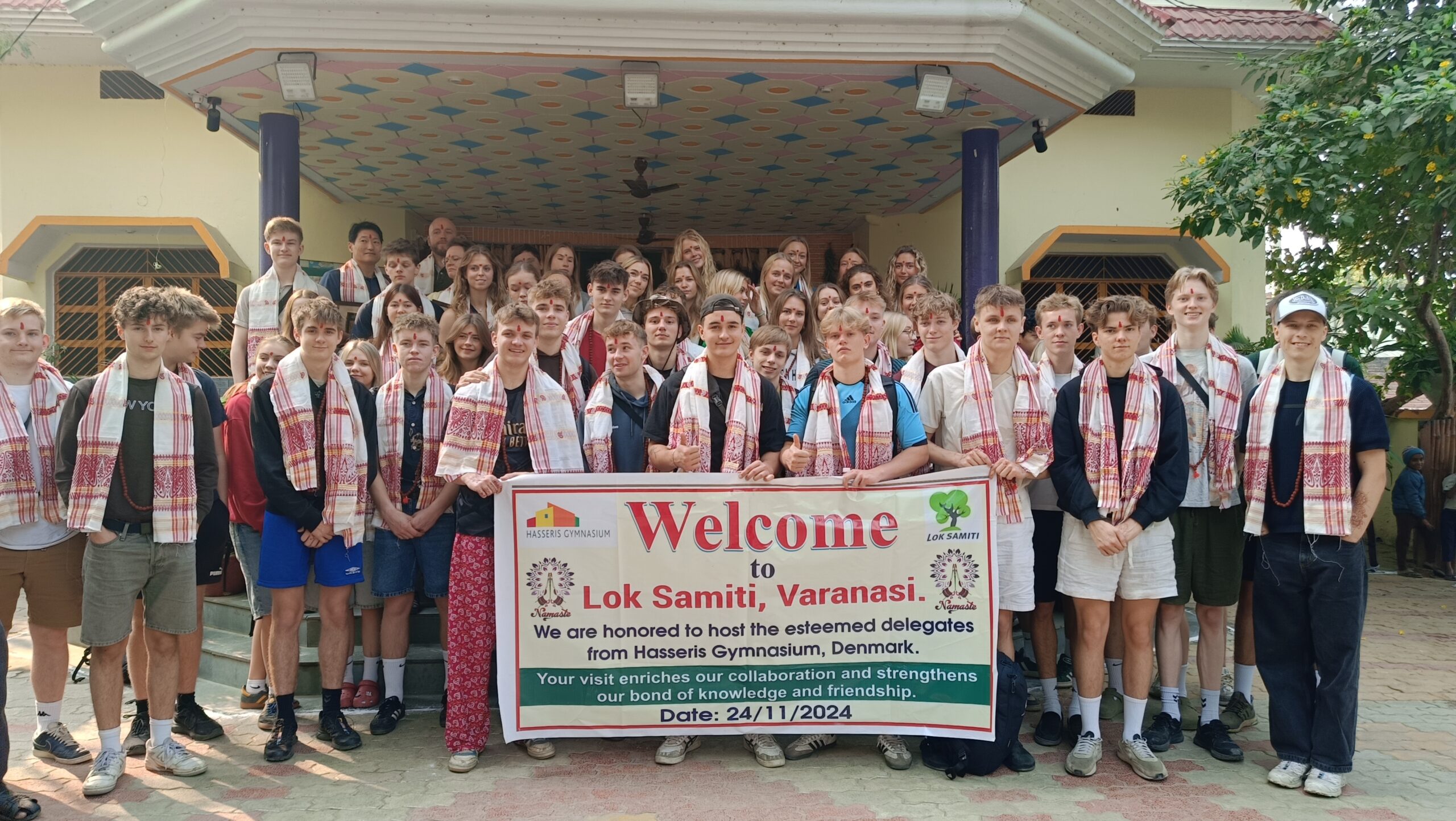
 

Students at Lok Samiti


The Beginning: Excitement Mixed with Nervousness

When I first received confirmation about the group, my initial reaction was a mix of excitement and anxiety. Hosting international visitors was not new to me, but managing a group of 60 people : students and professors together was an entirely different challenge. The expectations were high. This was not a leisure tour. It was an educational immersion. The students were curious, observant, and eager to learn. Their professors were experienced and detail-oriented. I knew that every aspect of the visit had to be carefully thought through.

The biggest concern at the beginning was simple but critical: logistics.

The Transport Challenge: Solving a Complex Puzzle

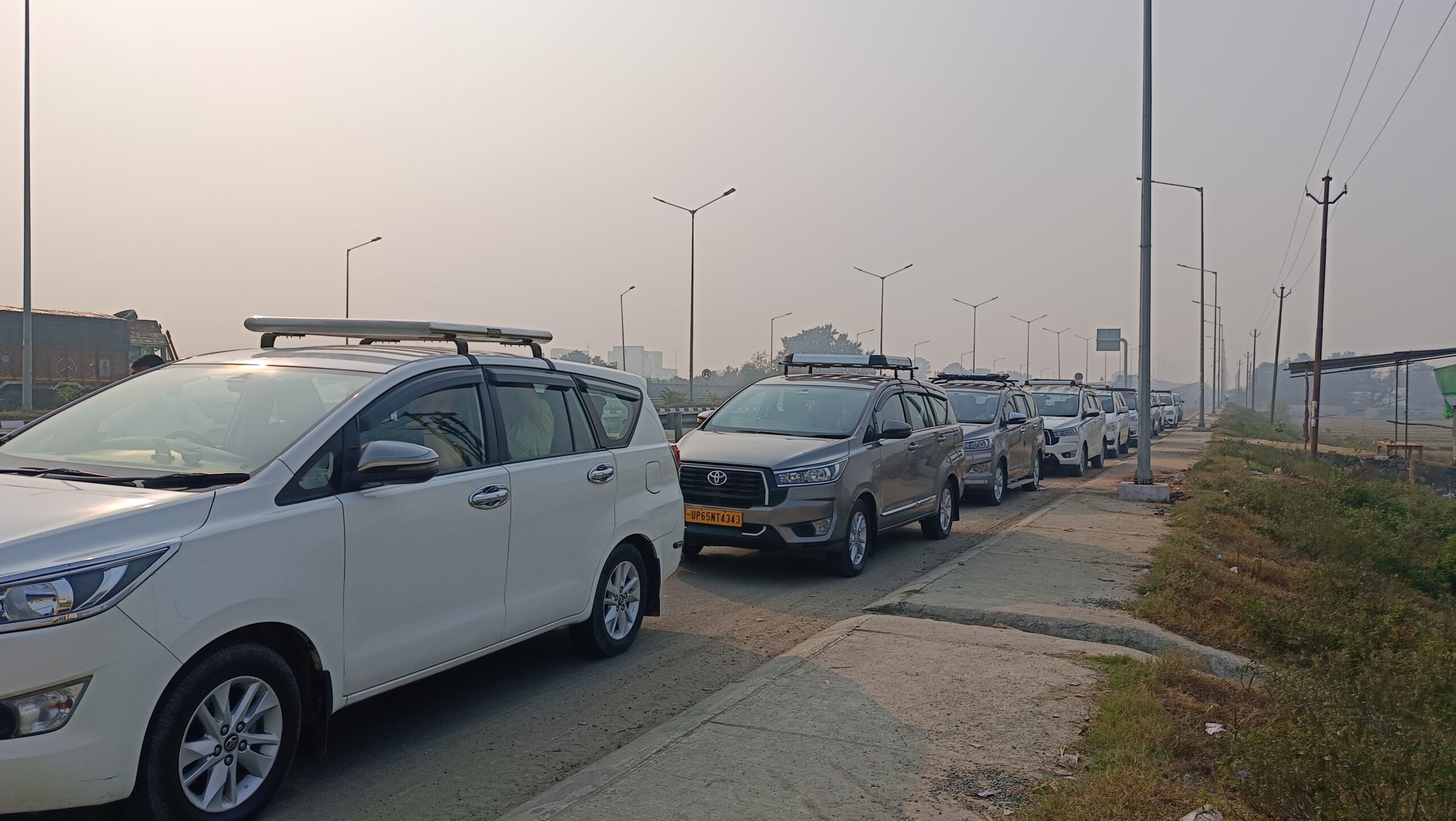
One of the first major hurdles was transportation. The plan was to take the group to Nagepur village, where they would interact with the grassroots organization Lok Samiti and experience rural life firsthand. However, there was a problem. The streets leading into the village were narrow, too narrow for a large bus to navigate comfortably. Bringing a 60-seater bus into the village would not only be impractical but could also disrupt the local environment. After careful consideration, I decided on an alternative solution: instead of one large vehicle, I arranged 15 Toyota Innova Crysta cars.

This decision came with its own complexities:

  • Coordinating 15 drivers
  • Ensuring all vehicles arrived on time
  • Managing group distribution
  • Maintaining communication across vehicles

But it was the most practical and respectful way to access the village without causing inconvenience to the residents. Looking back, this decision set the tone for the entire visit, it was about adapting to the local context rather than imposing external convenience.

Planning with Lok Samiti: Designing an Authentic Experience

A key part of the visit was the collaboration with Lok Samiti, a grassroots organization working in the Varanasi region on issues related to community development, environment, and social justice. I worked closely with Mr. Nandlal Master, the convener of Lok Samiti, to design the structure of the visit. Our goal was clear: we did not want to create a staged or artificial experience. We wanted the students to feel the authenticity of rural India.

We discussed the flow of the day in detail:

  1. A traditional welcome
  2. Refreshments
  3. An introductory presentation
  4. A documentary screening
  5. Village visits and community interaction
  6. A plantation activity
  7. Lunch and discussion
  8. Open Q&A session

Every element was intentional. Every segment had a purpose.
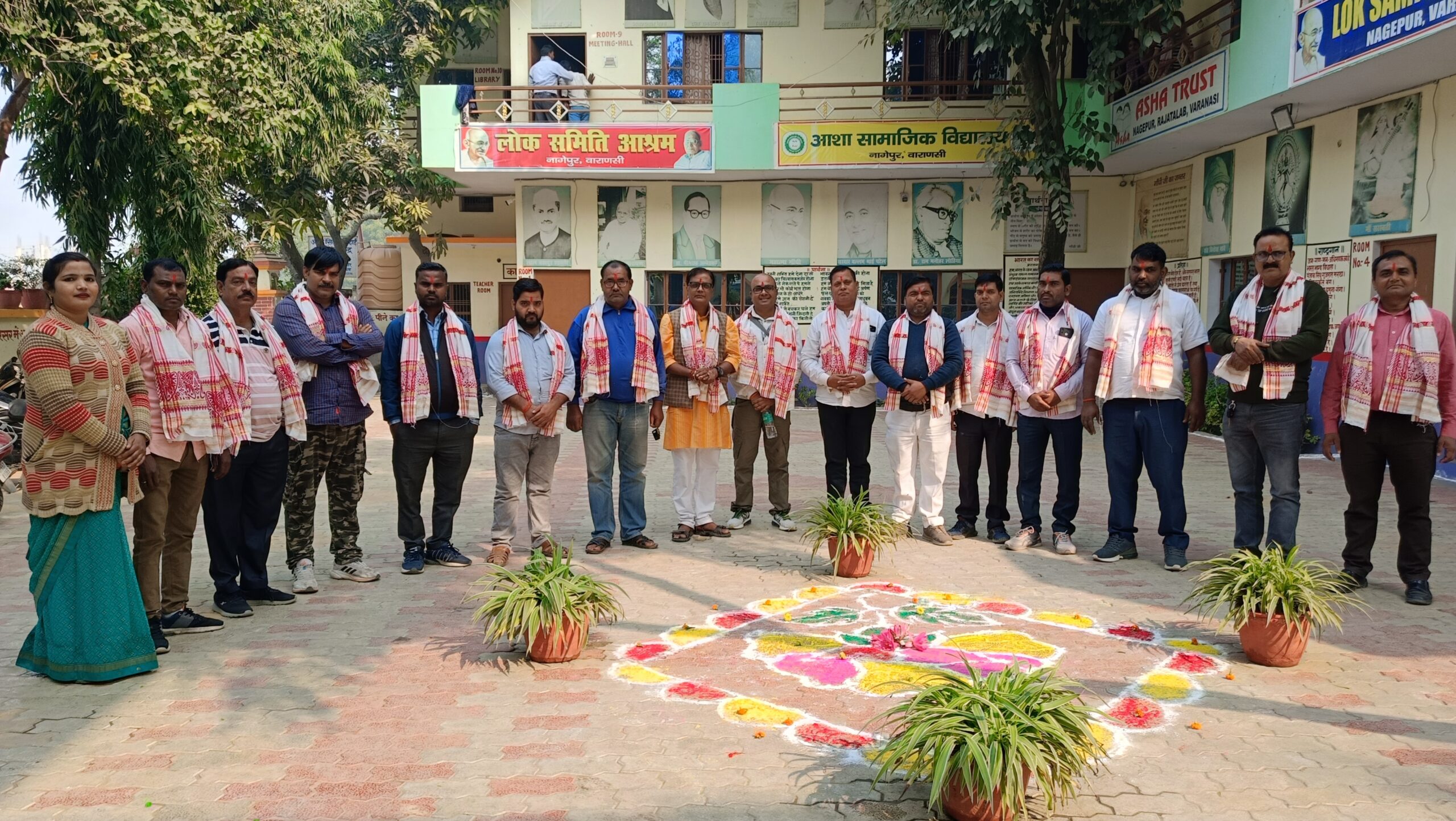
Lok Samiti workers, drivers, Nandlal Master and I


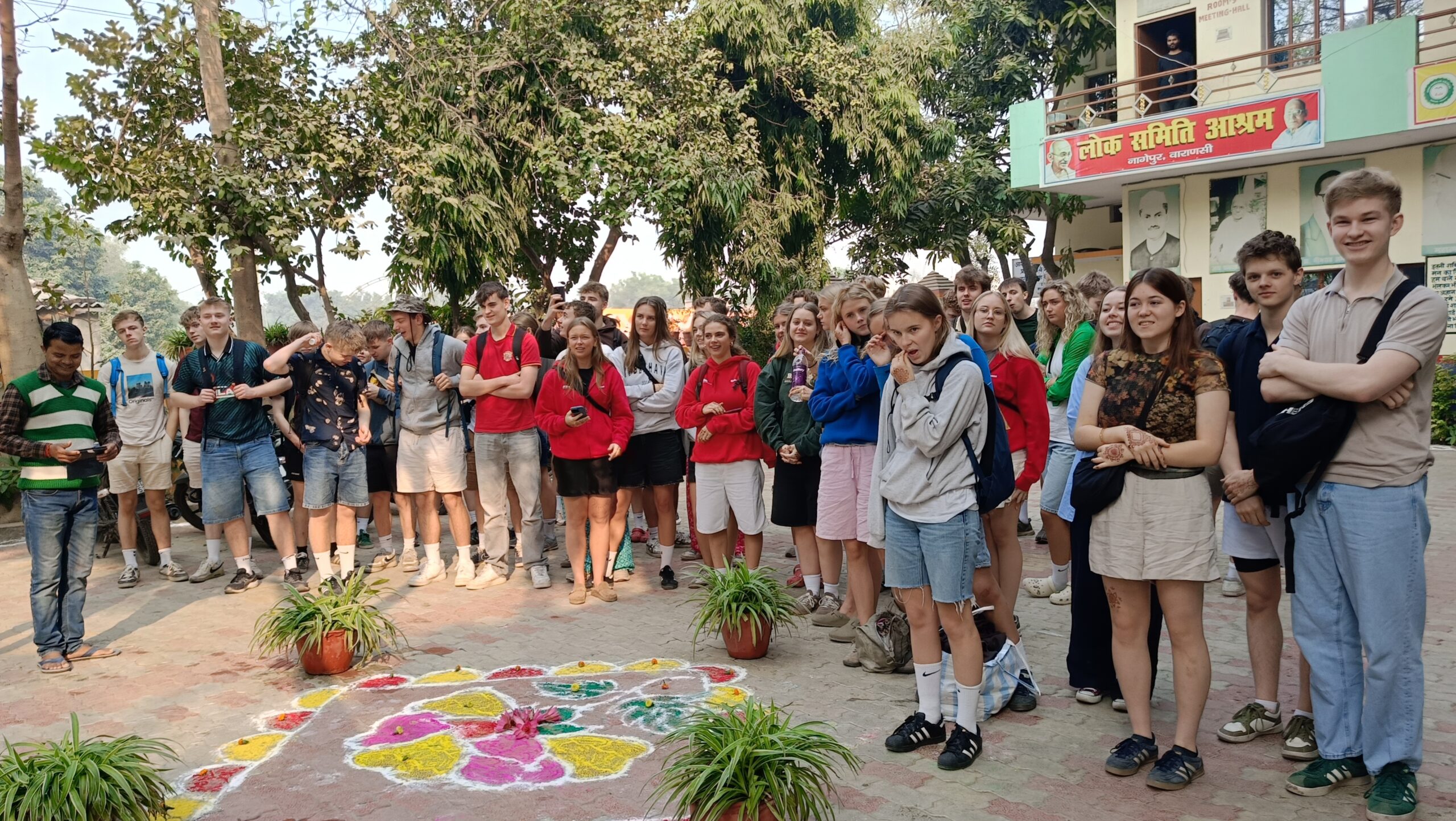
A Warm Welcome: First Impressions Matter

When the group arrived at Lok Samiti, we began with a traditional Indian welcome. Each student and professor was greeted with:

  • A scarf (angavastram)
  • A rudraksha mala
  • A tilak (teeka) applied on the forehead

This moment was simple, yet powerful. It immediately created a cultural connection. For many of the students, it was their first direct experience of such a traditional form of hospitality. You could see curiosity, smiles, and a sense of openness emerging right from the beginning.
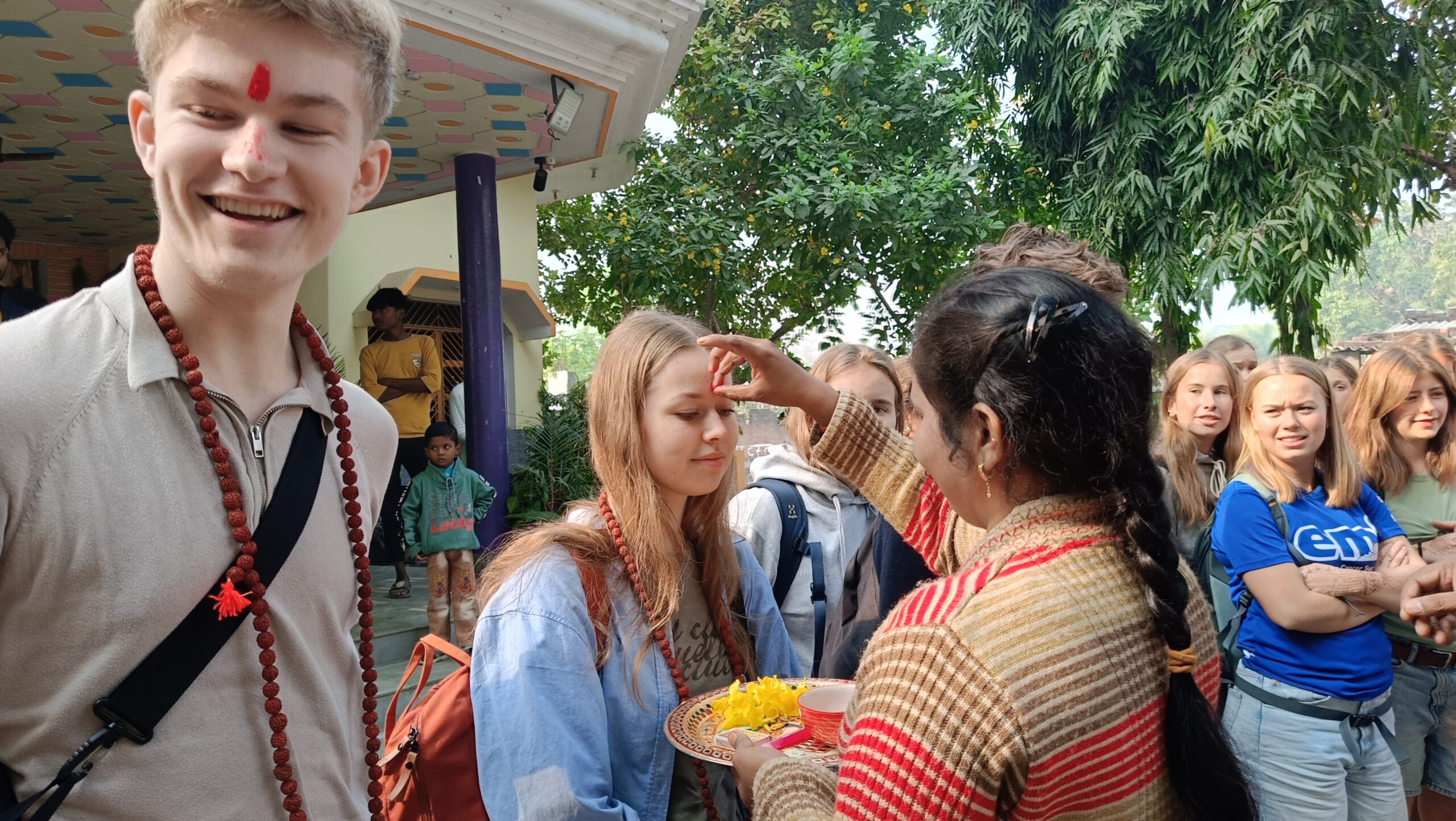
Welcome


Refreshments and Settling In

After the welcome, we arranged tea and light snacks. This gave everyone time to relax after the journey and adjust to the new environment. These small transitions are important. They create space for people to absorb their surroundings before engaging in deeper discussions.
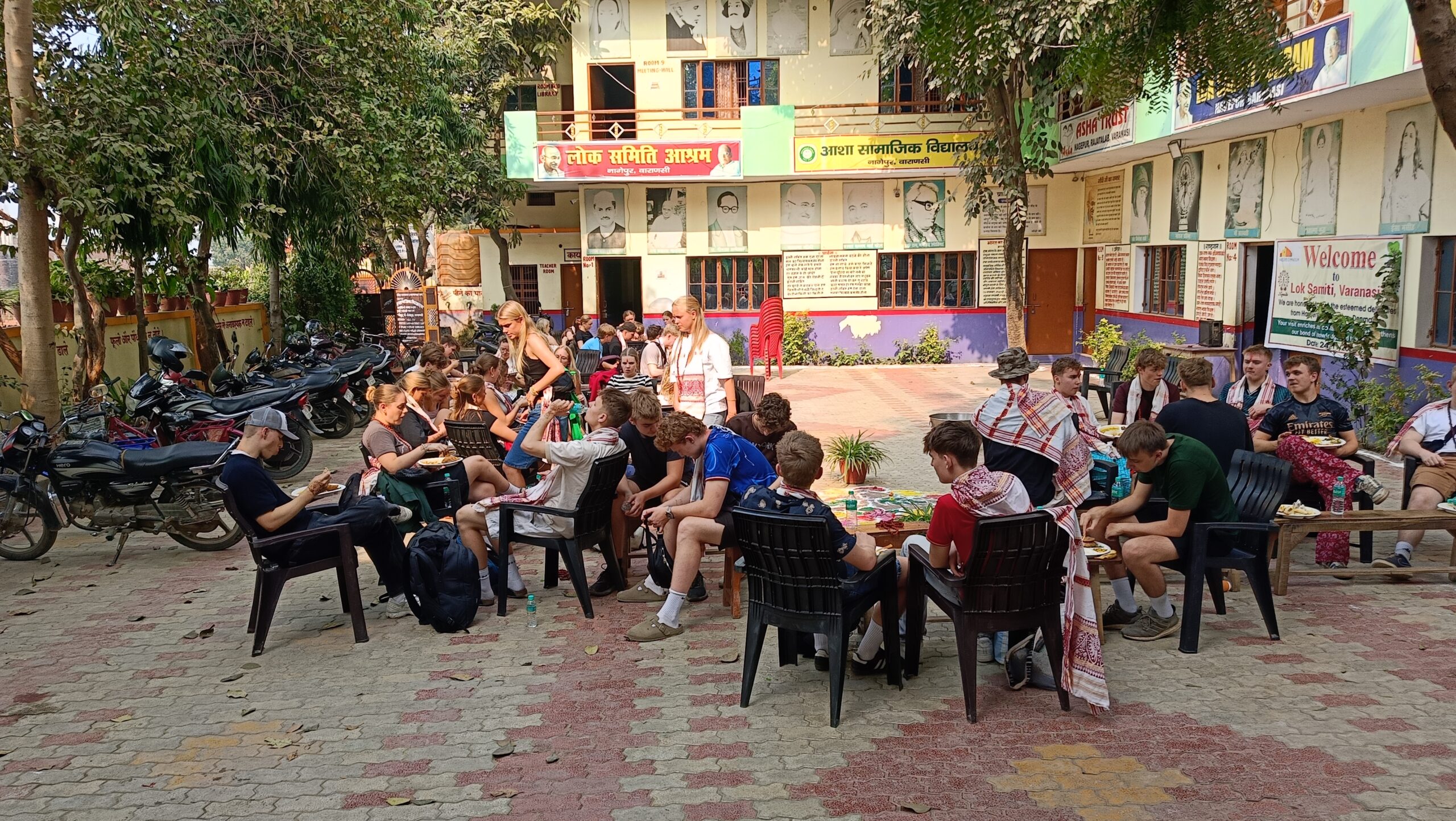
Refreshment time


Understanding Lok Samiti: The Indoor Session

We then moved to an indoor session where the team from Lok Samiti introduced their work.

This included:

  • An overview of their mission and activities
  • Introduction to field workers and volunteers
  • Distribution of informational booklets

The idea was to provide context before taking the students into the field. It helped them understand the social, environmental, and political dimensions of the work being done.
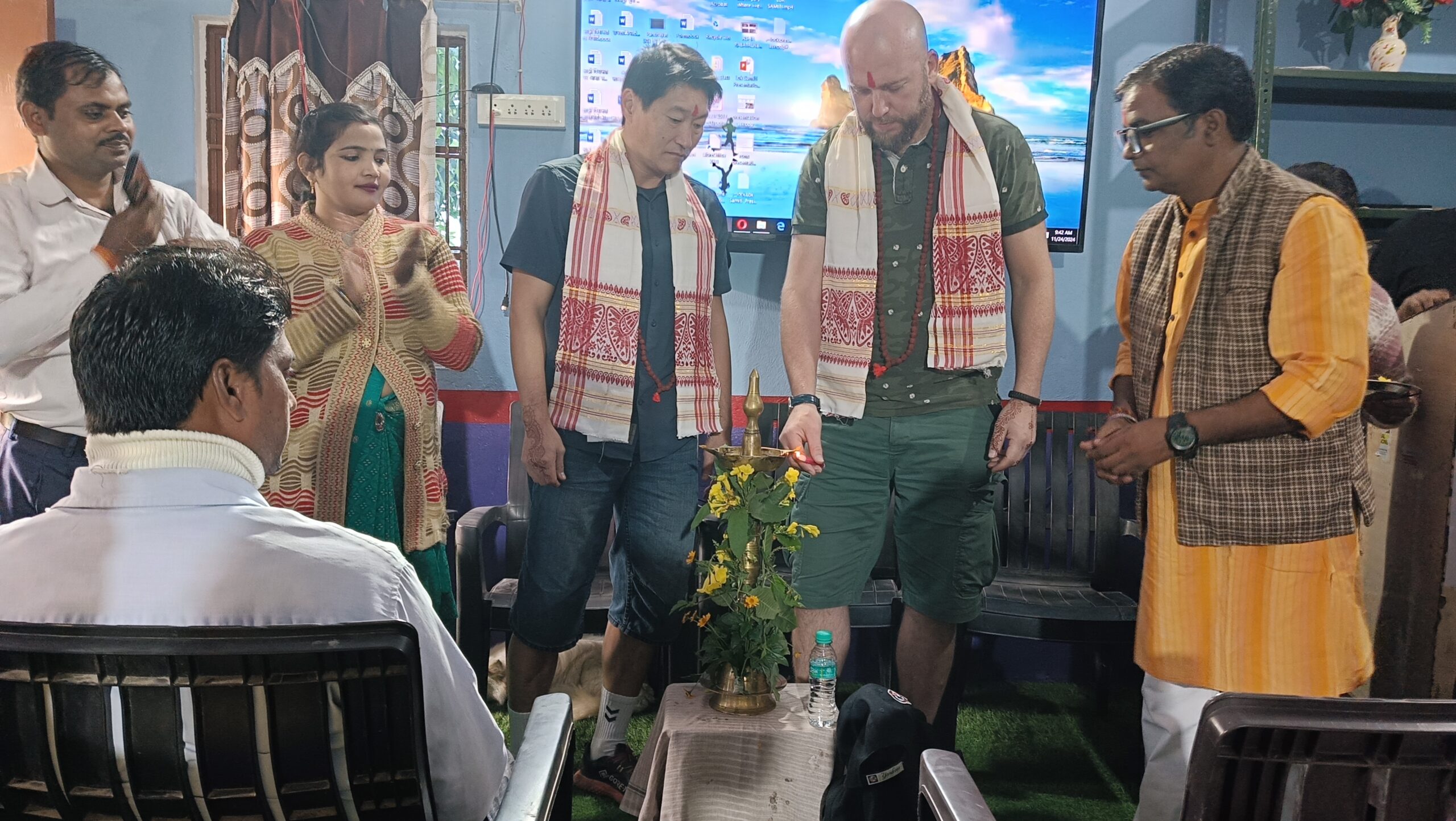
Traditional way to inaugrate the program


The Documentary: A Powerful Story of Resistance

One of the most impactful parts of the session was the screening of a documentary about Lok Samiti’s struggle against Coca-Cola.

The film highlighted:

  • Issues of groundwater depletion
  • Environmental degradation
  • Community mobilization
  • Grassroots activism

The students watched with deep interest. For many of them, this was their first exposure to such a movement in rural India. It also sparked questions that would later shape the discussion sessions.


Into the Village: Real Engagement Begins

After the indoor sessions, it was time to step into the village. Managing such a large group in a rural setting required careful planning. To ensure meaningful interaction, I divided the students into five smaller groups.

Each group was led by:

  • Myself
  • Two additional guides
  • Members of Lok Samiti

This structure allowed for more personal and immersive experiences.


Community Interaction: The Heart of the Visit

My primary focus was community interaction. We organized visits to local homes, where students could:

  • Sit with families
  • Observe daily life
  • Ask questions
  • Understand challenges firsthand

These moments were not scripted. They were organic and often emotional.

The students encountered:

  • Simplicity and resilience
  • Resource limitations
  • Strong community bonds

For many, this was a transformative experience. It shifted their understanding of poverty, development, and dignity.
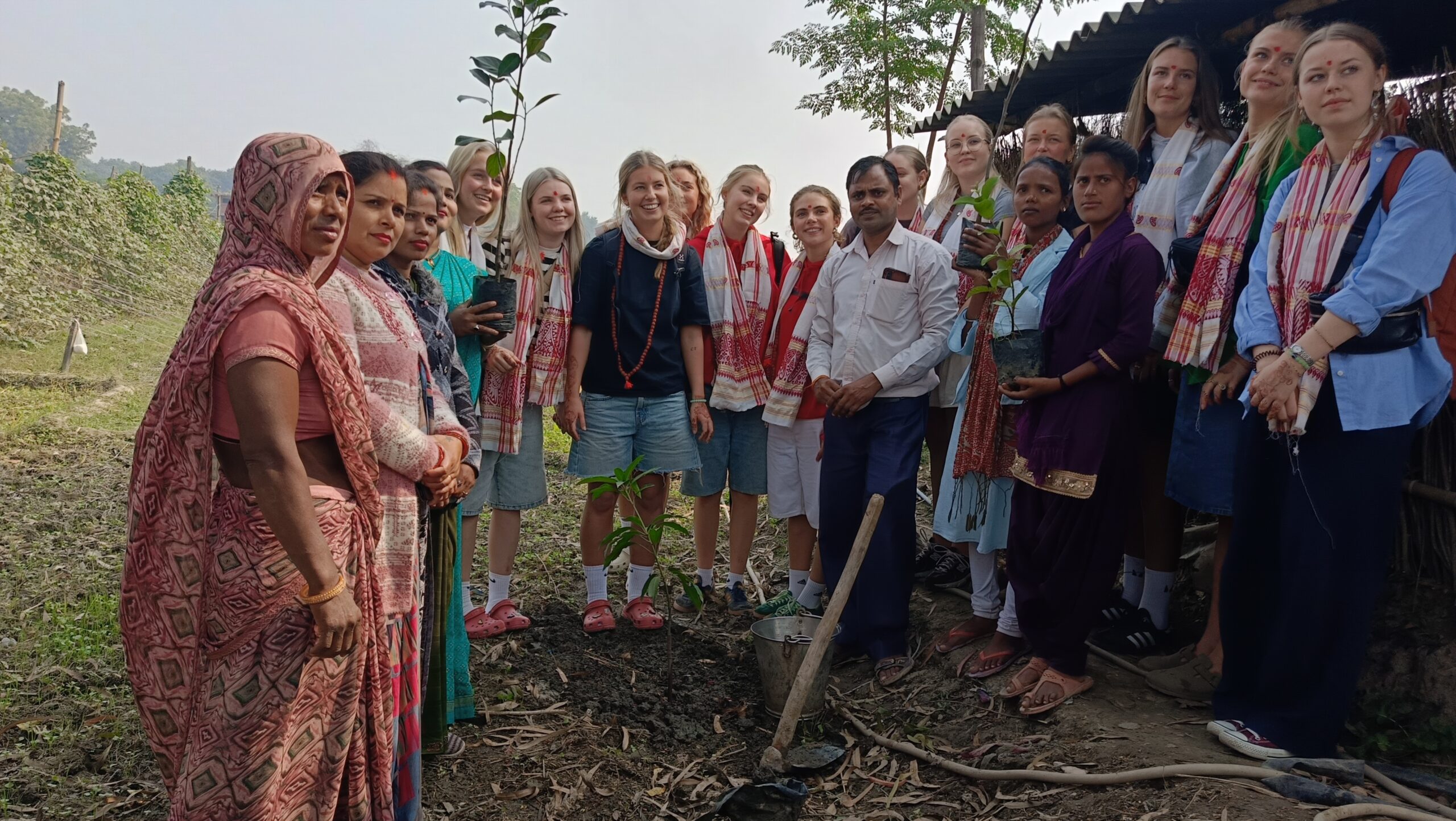
Community interaction


Plantation Activity: Leaving Something Behind

Another important part of the visit was the plantation program. The students actively participated in planting trees across the village. This was not just symbolic, it was a way of contributing to the community. We also requested the villagers to take care of the planted trees, ensuring that this act would have a lasting impact. The activity created a sense of shared responsibility and connection between the visitors and the local community.
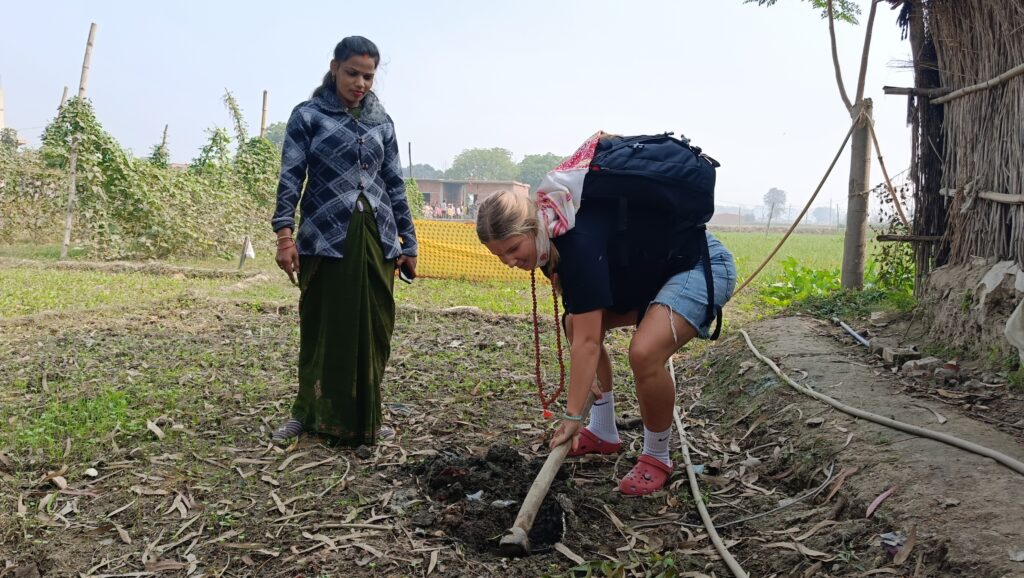
Plantation


Lunch and Informal Conversations

After the village visit and plantation activity, everyone returned to the Lok Samiti office for lunch. This was a much-needed break, but it was also a time for informal conversations. Students discussed their experiences, shared observations, and reflected on what they had seen.


The Q&A Session: Deep and Meaningful Dialogue

Post-lunch, we organized an open question-and-answer session. We invited Lok Samiti workers and volunteers working on various issues to engage directly with the students.

The range of topics covered was extensive:

  • Coca-Cola and environmental concerns
  • Women’s rights and health
  • Education challenges
  • Gender issues
  • Community development
  • Social inequality

The students asked thoughtful and sometimes difficult questions. The responses were honest, grounded, and insightful. This session stood out as one of the most intellectually engaging parts of the visit.
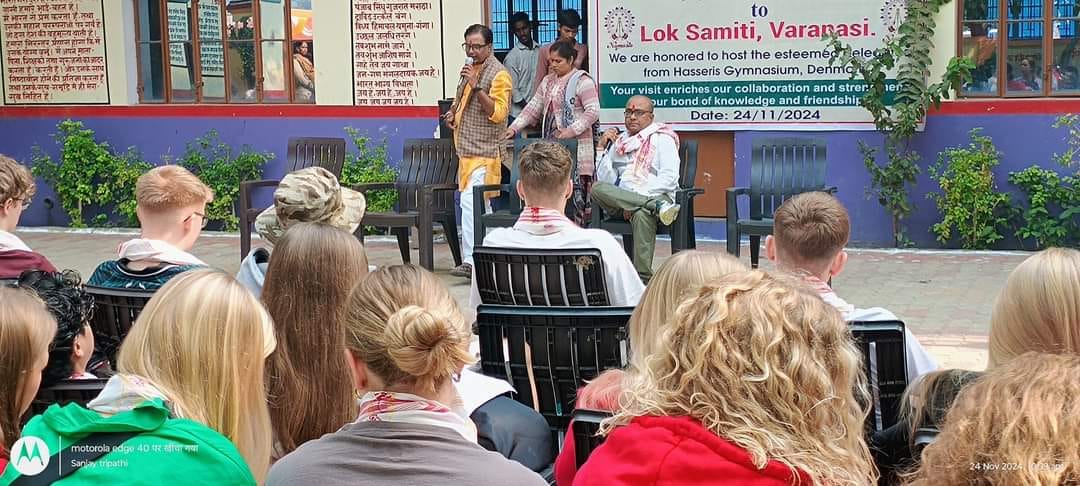
Question and Answer session


A Joyful Ending: Music, Dance, and Connection

Before concluding the visit, something beautiful happened. The students from Denmark and the children studying at the Lok Samiti school came together in a spontaneous celebration of music and dance. There was laughter, energy, and pure joy. Moments like these go beyond language and culture. They create human connections that are difficult to describe but impossible to forget.
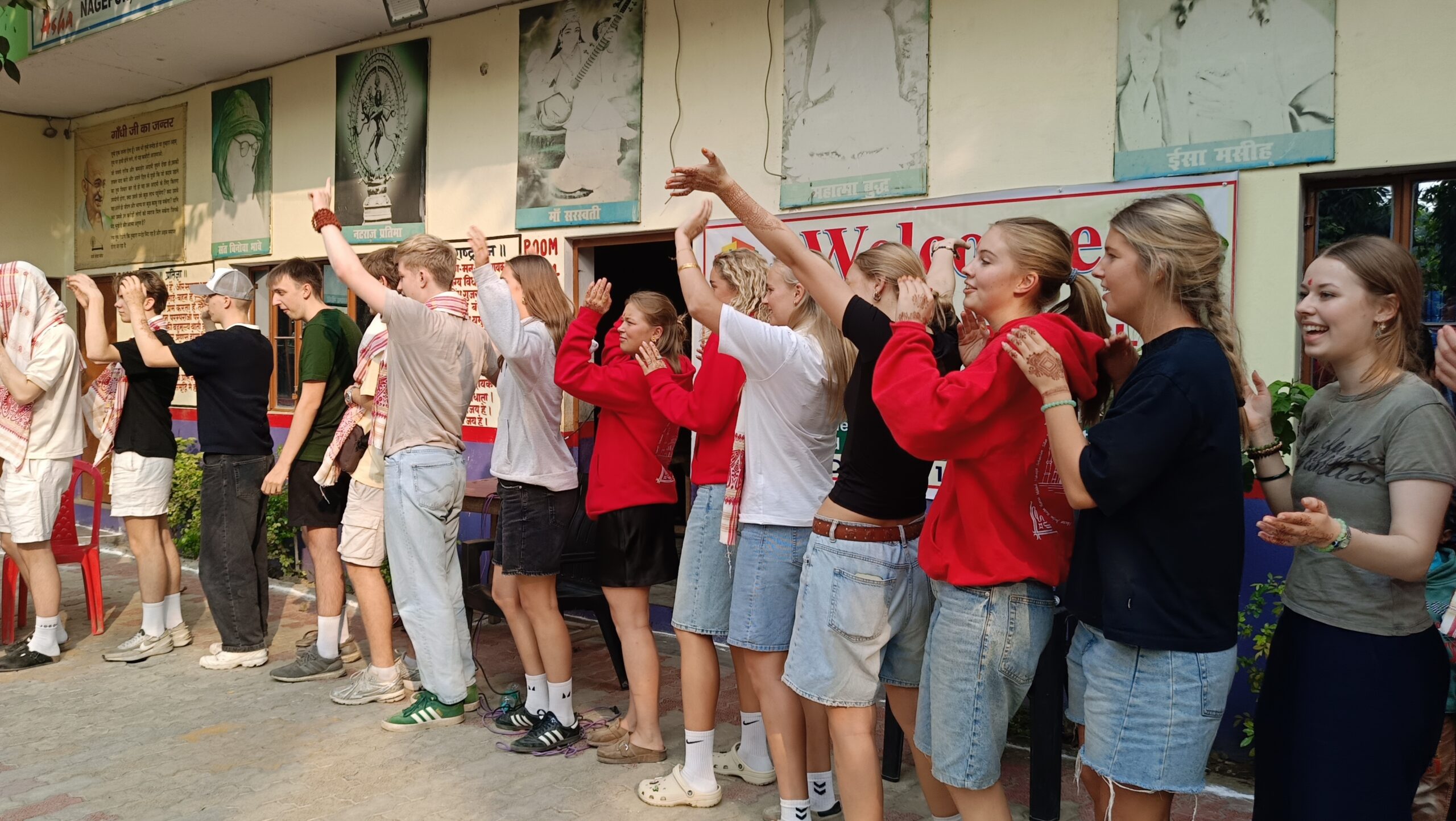
Students dancing


Acts of Kindness: Gifts and Support

The visiting students had brought gifts for the children at the Lok Samiti school. These were distributed, bringing smiles and excitement. In addition, they made a financial contribution. I later used this donation to purchase sweaters for all 550 children studying at the school. This gesture ensured that the impact of their visit would continue beyond a single day.


When the Plan Changes: Unexpected Challenges

Just when I thought the day had ended successfully, a new challenge emerged. The program coordinator informed me of sudden changes:

  • Their hotel had been changed at the last moment
  • Their train had been cancelled
  • They would now travel to Delhi by bus

This raised several concerns. From my experience, certain things did not add up. For example:

  • Booking 60 first AC train tickets together is highly unusual
  • Changing a five-star hotel after one night seemed suspicious

It appeared that there might have been some mismanagement or possibly a scam by their travel agent. However, at that moment, my role was not to investigate but to support.


Another Challenge: Arranging Dinner for 60 People

The group then requested packed dinner boxes for their journey. This was not a simple task. The key concern was food suitability. Many international visitors are not accustomed to spicy Indian food, and I wanted to ensure that the meals were comfortable and safe for them. I reached out to my niece, who runs a kitchen, and explained the situation. She prepared meals specifically tailored for the group : mild, balanced, and suitable for their taste. Coordinating the preparation and delivery of 60 meal boxes on short notice was challenging, but it was completed successfully.


The Final Stretch: Ending on a Positive Note

Despite the unexpected complications, everything was eventually managed. The group departed safely, well-fed, and satisfied. For me, it was a moment of relief and quiet satisfaction.


Reflections: What This Experience Meant to Me

This entire journey was more than just an assignment.

It was:

  • A test of my planning and problem-solving abilities
  • A lesson in adaptability
  • A reminder of the importance of cultural sensitivity
  • A reaffirmation of the value of grassroots engagement

I started the day feeling nervous about handling such a large group. I ended it with confidence, experience, and gratitude.


Looking Ahead

This experience has opened new possibilities. I look forward to working again with Hasseris Gymnasium in the future and continuing to create meaningful, educational, and responsible travel experiences. Because in the end, what matters is not just showing places but creating understanding.


Real journeys are not about destinations. They are about connections, challenges, and the stories we carry forward.


Contributed 300 books to a library

I have a friend in the US named Mr. Lane Rasberry, who is a social worker and data scientist by profession. I met him for the first time in 2007 when he was living in Varanasi to learn Hindi. We’ve been in touch ever since and have collaborated on many different projects. His dream was to establish a library in Varanasi for students. He contacted the Seattle Public Library to donate books for Varanasi students, and they generously provided almost 350 books covering a wide range of subjects, including science, math, geography, culture, and religion.

Books provided by Lane

He sent me a large consignment containing all the books and some other materials. The consignment arrived at the Kolkata port but promptly became entangled in a corrupt bureaucratic process. I received a call from someone at the Kolkata port office who informed me that my consignment could not be released because they had found offensive materials within it, violating Indian law. I inquired about the nature of these “offensive materials” and was told that they were materials related to sex education.

Books at the library of Lok Samiti

I laughed incredulously when I heard this. The irony was palpable: a country that gave the world the Kama Sutra and boasts erotic art in its sacred Hindu temples was now being told that sex education materials were prohibited. It was clear that this was just a pretext; there was something more sinister at play. He requested that I visit his office in Kolkata, but being preoccupied, I enlisted the help of my friends Babu and Marc.

They traveled to Kolkata the following day and met with the officer. The officer offered numerous excuses for withholding the consignment, primarily focusing on a few sex education chapters within a couple of books. It was astonishing to witness his meticulous examination of every page in those hundreds of books. If government officials consistently displayed such vigilance and integrity, India’s landscape would undoubtedly be transformed.

They excelled at their jobs when corruption and bribery were involved, but their competence vanished when it came to fulfilling their duties honestly. Babu and Marc contacted another officer who revealed that the “offensive material” was merely a pretext for a bribe. Seeking guidance on how to approach the officer, they were advised that a direct bribe request was unlikely and that they should instead contact the officer’s assistant.

Ultimately, they contacted the assistant who explicitly stated that the consignment would not be released without a bribe of Rs. 10,000. Despite Babu’s explanation that the books were destined for non-profit work, the assistant remained unyielding. Faced with no other recourse, they reluctantly paid the bribe, securing the release of the consignment. A subsequent courier service was engaged to transport the consignment to Varanasi, which arrived approximately a week later.

The next challenge was determining the library’s location. My home, with ample space and a ready demand, was a viable option. At that time, I was involved in an educational program for underprivileged children called “Chance India,” led by my Hungarian friend, Mr. Attila Csapo. As the program coordinator, I oversaw the education of 70 children—28 from the city and 42 from a village. These children were enrolled in the nearest English-medium schools to their homes.

Our village children were selected from an NGO called Lok Samiti, which operates a school named Asha Samajik Vidyalay. While the school has made significant progress, it still lacked many resources. Previously, it was merely a better alternative to no education at all. Despite having proper classes and teachers, the school required substantial improvements. We selected forty-two students from Asha Samajik Vidyalay and enrolled them in a proper English-medium school. Initially, I considered establishing the library at my home, but something held me back.

I realized that establishing a library at my home would limit the number of beneficiaries to perhaps the twenty-eight city children. Another potential location, Asha Samajik Vidyalay, lacked both a library and the necessary space. After discussing this with Nandlal Master, the coordinator of Lok Samiti, I learned that they were planning to open a library soon. Therefore, I decided to wait and donate the books to Lok Samiti once their library was operational.

Years passed without Lok Samiti realizing their library plans. Then came the Covid-19 pandemic, which brought everything to a standstill. My own health deteriorated, making for a challenging year. As normalcy gradually returned in 2023, Lok Samiti finally opened its library. The library was a collaborative effort, supported by individuals and organizations alike. Many former students of Lok Samiti contributed to its establishment.

I finally organized all the books and donated them to the library of Asha Samajik Vidyalay in Nagepur village, Varanasi, which is run by Lok Samiti. The school children had never seen such a diverse collection of books. Their enthusiasm for the new library was evident. Lane, Nandlal Master, and I were immensely gratified to see the books finally benefiting the community. Marc tragically passed away a few years ago from sudden liver failure. His joy at seeing these books become part of a proper library is undoubtedly immense, even in his absence. The library serves as a humble tribute to his invaluable contributions.

My next goal is to assist in establishing another library at an education center run by my friend, Mr. Amit Rajbhar. He operates special classes for children of kiln workers and also runs a school for children aged 5 to 15. I am hopeful about being able to contribute to this project as well.

Local newspaper also reported the story

Assistance for Children of Kiln Workers

I have a friend who is a social worker by profession and works with the children of kiln workers in Varanasi. The laborers who operate the kilns primarily come from rural or tribal areas of Bihar, Chhattisgarh, and Jharkhand. They migrate with their entire families to work sites in Uttar Pradesh and other regions. They reside at the construction sites in makeshift brick houses lacking cement plaster or a permanent roof. These homes are constructed by stacking bricks and using a tin sheet as a makeshift roof.

Mr. Amit Rajbhar with his wife

This is a seasonal job that begins in October after the monsoon ends and concludes in late June with the monsoon’s arrival. The work hours are demanding, with shifts starting at 10 PM and lasting until 4 PM the following day – an 18-hour workday. Workers typically take a short break, no longer than two hours, for meals during this period. Everyone in the family contributes, including young children as young as six or seven. While adults handle the primary tasks, children assist in various ways. With both parents working long hours, childcare and cooking fall primarily on the children.

Children of Kiln workers

Imagine enduring such grueling work hours under the open sky. The conditions are extreme. During March, April, May, and June, temperatures soar between 38 and 52 degrees Celsius (102 and 125 Fahrenheit). In contrast, December, January, and February bring frigid temperatures ranging from 35 to 5 degrees Celsius (95 to 40 Fahrenheit). The scorching heat, particularly in May, June, and July, is often accompanied by intense, deadly winds. Yet, these laborers are forced to toil under these inhumane conditions.

Look at their house in the background

My friend, Amit Rajbhar, has dedicated himself to working with the children of kiln workers. He strives to keep them engaged in productive activities. He runs a non-formal education center offering daily classes in basic subjects like math, Hindi, science, general knowledge, and hygiene. Amit’s goal is to create a brighter future for the next generation. He acknowledges that the immediate benefits for these children might be limited, but he believes his efforts will positively impact their children.

Brick making

Amit believes that educating these children will break the cycle of child labor. He shared a heartwarming story about a family he worked with in 2022. The following year, their children refused to return to work, expressing a desire to attend school instead. They asked their parents to continue working in Varanasi while they stayed with grandparents in their village to pursue education. This remarkable outcome exemplifies the positive impact of Amit’s work on breaking the cycle of child labor within a family.

Children of the kiln workers

I was familiar with Amit’s work but had never visited his site. When a guest expressed interest in helping underprivileged children, I decided to take her there. I was deeply shocked by the conditions and the children’s stories. It was late December, with temperatures around 10 degrees and cloudy skies. None of the children wore warm clothes or shoes, playing barefoot in the open.

Sweet distribution

I was heartbroken and struggled to hold back tears. Their stories haunted me, and I desperately wanted to help. Providing warm clothes and shoes seemed like an immediate need. I explored ways to raise funds for these essentials, including reaching out to my contacts. Unfortunately, despite promises from a few, I couldn’t secure the necessary funds. My efforts were met with constant setbacks.

I stayed in constant contact with Amit about the children. Their stories were constantly on my mind. I was determined to help them in 2023. The monsoon of 2023 finally arrived, and the families returned to their villages in Bihar, Chhattisgarh, and Jharkhand. Amit informed me about the start of kiln operations in Varanasi and the families’ expected return in late September. I visited them in late October and began planning a cloth supply for them.

I was thinking about whom to ask for help and suddenly a name clicked in my mind Mr. Amit Marathe whom I met in Varanasi in September 2023. He was an IT professional from Pune but was living in the US. I met with him when he was touring Varanasi and I worked with him as his guide in Varanasi and Ayodhya. I get to meet new people from all over the world but his name clicked in my mind first because of the kind of experience I had with him.

He came from a lower-middle-class family in Pune. His father drove a tuk-tuk. After attending a regular government school and overcoming challenges, he eventually achieved success. His humble background gave him a deep understanding of poverty. He often discussed India’s problems, such as poverty and corruption. Despite living in the US, he actively participated in Indian cultural activities. He was a very proud Indian with a strong desire to help others.

I thought I should ask him if he knew anyone involved in charity work in India. I explained the situation of those kids to him. I didn’t expect him to fund the kids, but after hearing their stories, he asked how much money was needed. He asked me to wait a few minutes and then sent me a receipt for the money transferred into my account. Mr. Amit told me he often does charity work in India and that I should have mentioned the kids when he was touring with me.

It was incredibly kind of him to immediately provide funds for the children’s clothes and other necessities. Finding such a supporter made me incredibly happy and brought tears to my eyes. I imagined the children’s faces when they received the clothes and shoes. I called Amit, my social worker friend, to determine the age group and number of children. The next day, I went to the market to buy warm clothes and shoes, including jackets, warm innerwear, gloves, socks, shoes, and woolen caps.

Bag of supplies

Now I had enough money for all those kids; in fact, the money given by Mr. Amit from the US was sufficient to support even more children. I went to the work site with all the supplies. As soon as the kids heard I had lots of gifts for them, they jumped with joy. Their happiness was indescribable. I distributed everything among them and had also brought sweets and samosas that we enjoyed together. It was a truly wonderful experience that will stay with me forever.

Mr. Amit, his wife and kids

I had some money left from the fund, which I used to buy woolen caps for the children at Asha Samajik Vidyalay, another non-profit run by my friend Mr. Nandlal Master. The kids there were equally delighted to receive the caps. I hope to continue doing this every year or whenever needed. A heartfelt thank you to Mr. Amit Marathe from the US for his generous support and to Mr. Amit Rajbhar for his care for the children.

Kids at Asha Samajik Vidyalay

Kidney Transplant at Ganga Ram Hospital

ये लेख मेरे छोटे भाई सामान कुंदन के किडनी ट्रांसप्लांट से सम्बंधित मेरे व्यक्तिगत अनुभव से प्रेरित है. कुंदन कुशीनगर का रहने वाला है लेकिन बनारस में रहा कर बीएचयू में पढाई कर रहा था. उसको सरदर्द की पुरानी बिमारी थी जो की एक दिन उभड़ गयी और चुकी वो बीएचयू का विद्यार्थी था और वहीँ हॉस्टल में रहता था इसलिए वो बीएचयू में ही बीएचयू के विद्यार्थियों के लिए चलने वाले डिस्पेंसरी गया दवा लेने के लिए. डॉक्टर ने उसका साधारण जांच किया जिसमे ब्लड प्रेशर बहुत गड़बड़ था. तो उसको उसको और भी कई जांच लिख दिया, जब रिजल्ट आया तो उसमे एक बहुत खतरनाक चीज सामने आयी और वो था क्रिएटिनिन लेवल जो की ५.१ पहुंच चुका था जबकि इसे होना चाहिए 0.5 से 1-1.2 के बीच जिससे ये तो अंदाज़ लग गया की किडनी से सम्बंधित कोई बहुत गंभीर बीमारी है.

उसका किडनी से सम्बंधित दूसरा टेस्ट किया गया तो मालूम चला की एक किडनी पूरी तरह ख़राब हो चुकी थी और दूसरी भी ८०% तक ख़राब हो चुकी थी. इसी बीच अभी दवा इलाज शुरू भी नहीं हुआ था की कुंदन के एक आँख की रेटिना सरक गयी और उसको एक आँख से दिखना बंद हो गया. एक २२ साल के लड़के के लिए ये जमीन फट जाने जैसी खबर थी. तुरंत उसके घर वालो को बुलाया गया. बीएचयू में इलाज भी शुरू हुआ लेकिन उसकी हालत दिन प्रति दिन बिगड़ती जा रही थी. कुछ दिनों तक तो बीएचयू ने खर्चा उठाया लेकिन उसके बाद वो भी हाँथ पीछे खींच लिए. दूसरी सबसे बड़ी परेशानी थी की बीएचयू में किडनी ट्रांसप्लांट की सुविधा नहीं थी, उसके पास केवल एक रास्ता था की वो या तो दिल्ली जाए या फिर लखनऊ जहाँ उसको बहुत पैसे की जरूरत पड़ती लेकिन परिवार के पास कुछ नहीं था.

असल में उन लोगों के पास गरीबी रेखा से नीचे वाला राशन कार्ड था. घर पर थोड़ा बहुत जमीन था खेती वाला और पिता जी भी बेरोजगार। अब सबसे बड़ी समस्या थी की पैसा कहाँ से आएगा। बीएचयू ने एक मदद किया की वो बोले की जबतक पैसे का व्यवस्था नहीं हो जाता तबतक मरीज को हम अपने यहाँ रखेंगे फ्री में लेकिन पैसे का व्यवस्था तो करना ही पड़ेगा। दिल्ली में गंगा राम हॉस्पिटल में पता करने पर मालूम चला की केवल ट्रांसप्लांट का ही खर्चा लगभग ७.५ लाख रुपया होगा। बीएचयू ने ये भी वादा किया वो लोग भी थोड़ा पैसा देंगे लेकिन पूरा नहीं कर पाएंगे। एक ही रास्ता बचा था की सरकारी मदद ली जाए लेकिन उसमे समय लगता है और समय की बहुत बड़ाई दिक़्क़त थी क्योकि कुंदन की तबियत दिन प्रति दिन बिगड़ती जा रही थी. उसके क्लास के पढ़ने वाले बच्चे बीएचयू में विरोध प्रदर्शन कर रहे थे, उनकी ये मांग थी की पूरा खर्चा बीएचयू उठाये लेकिन बीएचयू ने सीधे मना कर दिया था. एक समय तो ऐसा भी आ गया था जब कुंदन अपने आपको हॉस्पिटल के कमरे में बंद कर लिया था, बोला या तो मेरा इलाज करो या तो मुझे जान से मार दो.

उसको डायलिसिस पर रखा गया था. लेकिन लगभग लगभग सभी नसें बेकार हो चुकी थी. पहले हाँथ से  करते थे, फिर पैर से करना शुरू किये और फिर अंततः गर्दन के पास से करते थे. जब गर्दन के पास से करना शुरू  किये तो नस में पाइप लगवाने के लिए कुंदन को लखनऊ जाना पड़ता था. सोच कर भी शरीर कांप जाता है की कैसे उतनी बिमारी में वो बनारस से लखनऊ केवल एक पाइप डलवाने के लिए जाता था. मुझे अभी भी याद है की एक बार हम उसको अपने घर के पास देखे चाय की दूकान के बाहर खड़ा था, जो की मेरे लिए एक झटका सा था क्योकि उस समय उसकी तबियत इतनी ज्यादा खराब थी की सभी लोग लगभग मान चुके थे की अब कुंदन बचेगा नहीं। और उसको हॉस्पिटल से  बाहर देखना मेरे लिए बहुत बड़े अचरज का विषय था.

खैर, हम तुरंत उसके पास गए लेकिन उसकी हालत देखकर अपनी आँखों पर विश्वास नहीं हो रहा था. पूरा शरीर जबरदस्त रूप से सूज गया था और पीला पड चुका था. वो बात कर रहा था हमसे लेकिन क्या बोल रहा था कुछ समझ नहीं आ रहा था, लेकिन सुनाई उसको सब कुछ साफ़ साफ पड रहा था. तभी देखे कुंदन के पीछे उसके पिता जी भी खड़े थे. हम उनसे पूछे की कुंदन हॉस्पिटल से बाहर कैसे निकला तो वो बताये की वो खुद अपने से सारा पाइप निकाल कर हॉस्पिटल से बाहर आ गया था. मुझे अच्छी तरह से मालूम है की वो इतना ज्यादा कष्ट झेल चूका था की किसी तरह से बस उस नरक से बाहर आना चाहता था. समय बीतता जा रहा था लेकिन पैसे की व्यवस्था नहीं  हो पा रही थी. किसी तरह से उसके घर वाले, उसके मित्र और बाकी जो मेरे परिवार से हो सकता था हम लोग कर रहे थे. उसके मित्र लोग बीएचयू के अंदर और शहर में अलग अलग जगह भिक्षाटन कर के तकरीबन १.५ लाख रुपया जुटाए।

लेकिन उतने पैसे से कुछ नहीं होने वाला था और कुंदन की हालत भी दिन प्रति दिन बिगड़ती जा रही थी. अब हमलगों के पास केवल एक ही विकल्प था की जितना जल्दी से जल्दी हो सके सरकारी मदद की व्यवस्था की जाए. सरकारी मदद के लिए दो विकल्प थे- सांसद निधि और विधायक निधि। सांसद निधि से मदद मिलने में समय ज्यादा लगता है क्यंकि सबकुछ पहले दिल्ली फिर लखनऊ और फिर जिले स्तर पर पहुँचता है इसलिए लेट हो जाता है जबकि विधायक निधि सीधे लखनऊ से पास हो जाता है. इस बारे में ज्यादा जानकारी के लिए मैंने अपने बड़े भाई समान नन्दलाल मास्टर जी को फ़ोन किया जो की एक समाजसेवक है और लोक समिति नामक संस्था चलाते हैं. उन्होंने मुझे तुरंत संदीप पांडेय जी से मिलने के लिए बोला जो की उस समय बीएचयू में आईटी विभाग में पढ़ा रहे थे.

संदीप भईया से मेरा भी पहले कई बार मिलना हुआ था इसलिए कोई दिक़्क़त नहीं हुई. उन्होंने भी यही सलाह दी की राज्य सरकार से मदद लिया जाए. असल में उन्होंने ही मदद के लिए प्रार्थना पत्र अपने हांथो से लिखा और सारा कागज एकत्रित कर के ये बोला की अब जिलाधिकारी कार्यालय में आवेदन कर सकते हैं. आवेदन हो गया और अंततः लखनऊ से पैसा भी पास हो गया और वो पैसा सीधा गंगा राम हॉस्पिटल के खाते में कुंदन के इलाज के नाम पर ट्रांसफर कर दिया गया था. लेकिन अब दूसरी दिक़्क़त ये सामने आयी की वहाँ पर तारीख नहीं मिल रही थी. और इसी बीच लेट होने की वजह से वो पैसा वापस से राज्य सरकार के खाते में ट्रांसफर हो गया. जिसको दोबारा से बहुत चक्कर लगाने के बाद फिर से राज्य सरकार से गंगा राम में ट्रांसफर करवाया गया. अंततः ट्रांसप्लांट की डेट आ गयी और कुंदन को बीएचयू से गंगा राम हॉस्पिटल पहुंचा दिया गया.

इस बीच कुंदन बीएचयू में ९ महीने तक अपने जीवन के लिए संघर्ष करता रहा. उसके कष्ट को बयान कर पाना मुश्किल है, केवल वो लड़का ही अपना कष्ट समझ सकता है. खैर, बीएचयू में ९ महीने रहने का उसका बिल १३ लाख रुपया आया जिसमे दवा, डायलिसीस और वार्ड के कमरे का किराया सब कुछ जुड़ा हुआ था. बीएचयू ने उसके सारे खर्चे को माफ़ कर दिया और उसके अलावा १,६०,००० रुपया भी किया। लेकिन इस मदद से भी उसका इलाज पूरा नहीं हो पता क्योकि सरकार से केवल ४,५०,००० रूपये की मदद मिली थी जबकि गंगा राम में ट्रांसप्लांट का ही खर्च केवल ७,५०,००० रुपया था. इस बीच हम भी अपने दोस्तों से कुछ मदद लिए और अलोक, सना भाई, योगेश और कुछ एक विदेशी मित्रों ने भी कुंदन के लिए कुछ मदद किया जिससे उसका ऊपरी खर्च कुछ हद तक सपोर्ट हो सके.

गंगा राम हॉस्पिटल में ही कुंदन के पिता जी की मुलाक़ात किसी एनजीओ के एजेंट से हुई जो इनको बोला की वो कुंदन का बाकी खर्चा किसी संस्था से दिला देगा और ट्रांसप्लांट के बाद दवा में होने वाले खर्च में भी मदद करेगा जो की बहुत बड़े सुकून की खबर थी. इसके बदले वो कुंदन के पिता जी से कुंदन के इलाज सम्बंधित सारे कागज लिया और कुछ दिन बाद बाद इन लोगों को कुछ पैसा भी ला कर दिया। पूरा उसने ७०,००० रुपया दिया था लेकिन बाद में मालूम चला की वो एक ऐसे गैंग का एजेंट था जो कुंदन जैसे निर्धन परिवार वालों की मजबूरी का फायदा उठा कर अलग अलग जगहों से पैसा लेता है और उसका थोड़ा हिस्सा मरीज को देगा और बाकी अपने खुद खा जाता है. कुछ हफ़्तों बाद वो कुंदन के पिता जी पर दबाव बनाने लगा दिए हुए ७०,००० वापिस करने के लिए लेकिन इन लोगों के वापस करने के लिए कुछ था ही नहीं तो देते कहाँ से.

खैर, अंततः कुंदन का किडनी ट्रांसप्लांट हुआ, उसके पिता जी की एक किडनी लेकर। कुंदन को ३ महीने हॉस्पिटल में रखा गया था जिस बीच उसकी हर तीसरे दिन डायलिसिस की जाती थी. लेकिन इस बीच वो शुगर का मरीज हो गया और एक कान से सुनाई देना बंद कर दिया। डॉक्टर ने बोला की ये ट्रांसप्लांट का साइड एफेक्ट है जो की पूरी तरह ख़त्म तो नहीं होगा लेकिन धीरे धीरे कम हो जायेगा। अंततः कुंदन के डिस्चार्ज होने का समय आ गया लेकिन फिर वही दिक़्क़त की पैसा नहीं था हॉस्पिटल का बिल चुकाने के लिए. लेकिन गंगा राम हॉस्पिटल ने मानवता का परिचय देते हुए कुंदन के डायलिसिस का बिल माफ़ कर दिया और किसी तरह कुंदन हॉस्पिटल से डिस्चार्ज हो कर बनारस वापस आया.

डिस्चार्ज होने के बाद कुंदन को शुरू में हर महीने में एक बार दिल्ली जाना पड़ता था अपने डॉक्टर से मिलने के लिए जो की बाद में ३ महीने में एक बार कर दिया गया है. आज कुंदन स्वस्थ है लेकिन उसको बहुत सावधानी बरतनी पड़ती है जैसे की शारीरिक श्रम का काम नहीं करना चाहिए, धुल, धुँआ, प्रदूषण से बचना है. साफ़ सफाई की विशेष ख्याल रखना है ताकि किसी तरह के कोई भी इन्फेक्शन पनपने की संभावना न हो, शुगर की वजह से खान-पान का विशेष ख्याल रखना है और हाँ, दवा जिंदगी भर चलेगी। शुरू में तो लगभग ३५-४० गोली रोज खानी पड़ती थी जो की समय के हिसाब से धीरे धीर काम होंगी लेकिन कुछ दवाएं जिंदगी भर खाना पड़ेगा। और ये दवाएं सस्ती भी नहीं है, इनका खर्च लगभग १२,००० रुपया महीना पड़ता है. जैसे ईश्वर इतना कठिन समय में मदद किये वैसे ही दवा की भी व्यवस्था हो जाएगी यही प्रार्थना है. ॐ शांति।

इन्फेक्शन का पता चला- 10 जुलाई 2015 

बीएचयू में इलाज चला- 23 अप्रैल 2016 तक 

फिर गंगा राम में इलाज चला – अगस्त २०१६ तक    

Alwar, Rajasthan

My Trip to Alwar with Tarun Bharat Sangh

In July, I had the opportunity to visit Alwar, a district in Rajasthan. Honestly, I was a little nervous before going — Rajasthan in summer has a reputation for unbearable heat, and I expected to see desert, dry winds, and parched land. To my surprise, Alwar was nothing like I had imagined. It was green, hilly, full of rivers, wildlife (especially peacocks), and the air was humid and wet. I traveled with 14 colleagues, and together we enjoyed nature’s beauty every single day we were there.

My whole group with Mr. Singh after plantation


The Journey to Bheekampura

We started our journey by taking an overnight train from Varanasi to Agra, then a bus to Dausa. From there, we hired a jeep to reach the Tarun Bharat Sangh office in Bheekampura. The drive took about an hour and gave us our first glimpse of the stunning Rajasthani landscape — hills covered in greenery, small villages, and a culture that felt so different from my part of India. The food, clothing, and lifestyle were new to me. Even though it was hot and humid, it was not at all unbearable. On our very first day, we already knew this trip was going to be unforgettable.

My whole group


Immersing in Rajasthani Villages

We stayed in Bheekampura for three days, and each day Tarun Bharat Sangh arranged tours with guides and taxis. They took us to remote villages, some so isolated that they didn’t even have proper roads. Communities had created makeshift arrangements for themselves, showcasing resilience and self-reliance. One cultural detail stood out to me — the prevalence of hookah smoking. Many people in Alwar villages smoked hookah, and they claimed it helped treat small health issues like coughs and colds.

Having chai in a local market

Another striking observation was how women covered their faces and heads far more strictly than in other regions I had visited. Men wore large, colorful turbans that not only looked beautiful but also served a practical purpose — protection from the intense summer heat. While some people explained face-covering as protection against the weather, I couldn’t ignore the reality that Rajasthan has long been known for its male-dominated traditions.

Covered faces


Sariska Tiger Reserve

One highlight of our trip was visiting the Sariska Tiger Reserve, about 40 km from where we stayed. As someone deeply concerned about the declining tiger population in India, I was thrilled at the chance to see one in the wild. Although we spent more than eight hours in the reserve, we didn’t see any tigers. Instead, we encountered deer, jackals, chital, sambhar, nilgai, and other animals. We also visited the Pandupol Temple, believed to be the site where Hanuman met Bheem during the Mahabharata era. The Hanuman statue there had a unique style that I had never seen before, distinct to Rajasthan.

Can you believe it is Rajashtan?


An Unexpected Encounter

On our way back, we stopped at another temple tucked away at the foot of a hill, surrounded by thick jungle. The setting was surreal — quiet, isolated, and filled only with the sounds of wind, birds, monkeys, and peacocks. To our astonishment, a solitary Baba lived there. We first saw him standing alone on the rooftop of the temple. He welcomed us warmly, offered chai, and shared stories of his life. He told us he had left home at the age of seven and had spent his life wandering, living in ashrams, and dedicating himself to God. Interestingly, he had even lived in Varanasi during the 1980s.

Lord Hanuman

The Baba gave us a tour of the temple, built on the samadhi of a famous saint, and told us about his encounters with tigers during the dry season. According to him, animals were far more understanding than humans — they always knew who was a friend and who was not. His words stayed with me long after we left.

Rajasthani woman


Reflections on the Trip

After days of exploring villages, temples, and wildlife, we returned to the Tarun Bharat Sangh office, tired but grateful. This was not the kind of trip any travel agent could organize. It gave us access to hidden places, genuine communities, and unforgettable experiences. On our way back, we boarded a train from Bandikui to Varanasi, ending our journey. But Alwar left a lasting impression on me — the hospitality of Tarun Bharat Sangh, the resilience of the villages, the warmth of the people, the breathtaking wildlife, and the colorful traditions of Rajasthan.

This trip was truly one of a kind, and I will always cherish it.

Kids

Union Carbide Gas Disaster, Bhopal

Union Carbide Gas Disaster

I recently visited Bhopal with my friend to explore the city and meet the NGOs still working on the Bhopal Gas Disaster that shook India in 1984. Before going, I had no idea about which organizations were active there, so I called my friend Nandlal Master from Lok Samiti in Varanasi. Nandlal is a well-known social activist, and he suggested I visit the Chingari Trust. He knew about it because the Trust awards women fighting against exploitative corporations, and five women from his own NGO in Varanasi had once been recognized by them. I assumed there would be several NGOs still working on the issue in Bhopal, but to my surprise, I learned that Chingari Trust was practically the only one consistently helping survivors on a large scale.

union carbide gas disaster

First Impressions

When I called, the Chingari Trust staff were warm and welcoming. They invited me to visit their office and rehabilitation center near the affected area. Initially, I expected a small office with a few staff members. But as soon as I entered, I was shocked—there were dozens of families, many of them with children born with physical and neurological disabilities caused by the gas tragedy and its after-effects. I saw nearly a hundred children, ranging from infants to teenagers, participating in physical therapy and rehabilitation programs. It was heartbreaking. Until then, I had assumed that only people directly exposed during the 1984 disaster were affected, but I discovered that children are still being born with disabilities due to lingering chemical contamination.

wall paintings around factory are

The Work of Chingari Trust

The work being done at Chingari Trust left a deep impression on me. The organization was founded by Rashida Bee and Champadevi Shukla, two women who themselves suffered from the gas tragedy. Rashida Bee even received a major international award of around Rs. 50 lakhs in San Francisco for her activism, and instead of keeping the money, she used it to establish Chingari Trust and donated the rest back to the cause. Their center provides physiotherapy, speech therapy, occupational therapy, and counseling to affected children free of cost. Despite their efforts, Rashida Bee told me they are struggling to meet the overwhelming demand and are now working on building a new hospital dedicated to survivors and their children.

families with the affected kids

Contaminated Water – The Ongoing Disaster

Later, I spoke to the IT coordinator at the Trust, who gave me a tour of the surrounding area. He explained that the tragedy didn’t end in 1984. The factory site continues to leak harmful chemicals into the groundwater, which thousands of nearby families still rely on. This contaminated water is directly linked to ongoing health problems and birth defects in the community. When we walked only ten minutes from the Trust’s office, I was shocked again. Families were living right across the road from the abandoned Union Carbide factory, now owned by Dow Chemicals. It looked like any other crowded Indian neighborhood, but beneath the surface, people were living with poisoned soil and water.

newpaper cuttings

Questions Without Answers

My American friend Lane, who was with me, pointed out that in the United States, factories dealing with such dangerous chemicals are usually built far from populated areas. It made me wonder: why did our government allow this factory to operate in the middle of a city in the first place? And even after the disaster, why didn’t they relocate residents to safer areas? It is impossible to avoid the conclusion that both Union Carbide (and now Dow Chemicals) and sections of the Indian government are equally responsible for the ongoing suffering. The politics and corporate influence behind this tragedy are undeniable, but the fact remains: thousands of innocent lives were destroyed and continue to be endangered. Accountability has been delayed for far too long.

Final Thoughts

My visit to Chingari Trust completely changed the way I understood the Bhopal Gas Disaster. This was not just an accident of the past; it is a living tragedy that still haunts the people of Bhopal every single day. Meeting Rashida Bee and seeing the resilience of affected families was deeply moving. The story of Bhopal is not only about corporate negligence, but also about government apathy. Until justice is served and proper rehabilitation is provided, the victims of Bhopal will continue to remind us of how dangerous unchecked industrial greed and weak governance can be.

really sad

he wsa trying to say something to me

Bhopal

The City

I visited Bhopal for the first time with a friend, and I really loved the place, especially the way Madhya Pradesh Tourism Department has organized tourism in the state. There was a small issue with the hotel booking, but it was fine in the end. We stayed at Ranjeet Hotel near the railway station. The hotel was nice for the amount I paid, but when I had tried to book it over the phone from Varanasi, they told me there were no rooms available. We reached Bhopal around 10:30 PM without any booking, but since we already knew about Ranjeet Hotel, we decided to take a chance and show up there. Surprisingly, even though they had told me earlier that no rooms were available, they still gave us one. Strange, but definitely good for us.

the city

Bada Lake

We had one important purpose in Bhopal, which was to visit Chingari Trust to learn about their work. We managed to do that the very next day after arriving. With plenty of time left, we decided to explore the city. On the suggestion of the people working at Chingari Trust, we went to see the two famous lakes of Bhopal: Bada Talab and Chhota Talab. Both were wonderful, clean, and offered several options for water sports. Chhota Talab is separated from Bada Talab by an over-bridge. We didn’t try any sports but enjoyed walking around and soaking in the calm atmosphere.

wetland for birds and crocodiles

Beautiful Kids at the Mosque

After visiting the lakes, we took an auto rickshaw back to the hotel. On the way, I asked the driver if there was any other interesting place nearby. He suggested the Darul Uloom Taj-ul-Masjid. I had already read about this mosque and wanted to see it, so we decided to visit before returning to the hotel. It turned out to be one of the best experiences in Bhopal. The mosque was grand and beautiful, and it is considered one of the largest mosques in Asia. Unlike many mosques in India, this one allows women, non-Muslims, and foreigners to enter, which I found very welcoming.

beautiful kids at the mosque

Meeting a Student

Inside the mosque, there is an Islamic school. I met a very nice student who showed me around. He shared his life story and even took me to his room. He told me that he had studied up to Class 12 in a regular school, but afterward, he chose to dedicate himself to Islamic studies. He showed me his books, but when I wanted to touch his Quran, he politely stopped me. He explained that since the Quran is the holiest book for Muslims, there is a specific process of purification required before touching it. I was really impressed by his respect for his faith.

We spoke for nearly two hours about many things, including politics and Hindu-Muslim relations. He told me that Islam strictly prohibits creating tensions between communities, so anyone who does it is not a true Muslim, no matter what they claim. I had heard this before, but it was refreshing to meet a young person who truly believed in it. For me, such people represent the real development of India. We exchanged contact information, and I hope to meet him again whenever I return to Bhopal.

Van Vihar National Park

The next day, we visited a small national park called Van Vihar, located near Bada Talab. It was a peaceful and well-maintained place. They had bicycles for rent, battery-operated vehicles, and of course, walking paths. The park was quiet and clean, with a wide variety of animals such as lions, tigers, leopards, deer, bears, hyenas, crocodiles, and monkeys. The animals seemed to be kept in good condition. The park stretches for about seven kilometers from one end to the other. Plastic bags were banned, and it was a no-horn zone, so it felt very different from the usual chaos of Indian cities. At the far end, there was a cafeteria serving snacks. We rented bicycles, explored the park, and really enjoyed the calm environment.

awesome place

One interesting thing I noticed was the urinal system. They had arranged a separate design for Muslims, since they squat while urinating. It was set up lower to the ground to allow this posture. Despite traveling across India, visiting Muslim friends’ homes, and experiencing many things, I had never seen anything like this before. Bhopal has a large Muslim population, which probably explains the arrangement.

look at the right side ones

More Sites Nearby

Later, we visited Bhimbetka, famous for its ancient cave paintings, and on the way back, we stopped at the Bhojpur Shiva Temple. The next day, we explored Sanchi, known for its Buddhist stupas. All of these places were fascinating, and I thoroughly enjoyed Madhya Pradesh. The weather was pleasant, the city was green and quiet, the sites were clean, and I never encountered touts.

Honestly, my home state has far better tourism potential than Madhya Pradesh, but because of politics and government negligence, tourism here is rarely given priority. If things continue this way, Madhya Pradesh will soon surpass Uttar Pradesh as a leading tourism destination. Visiting Bhopal and its surroundings was a truly memorable experience.

Mumbai Gay Pride 2011

Mumbai – The Place of the Most Happening Gay Events in India

Mumbai, known for hosting some of the most happening gay events in India, held its annual pride march on the 29th of January, and I went to attend it. The parade was organized by the Humsafar Trust, the biggest organization working on LGBT rights in Maharashtra. In earlier years, the pride march was held on the 16th of August, but this year the date was changed because of the hot and humid weather conditions in Mumbai during that month. The earlier date carried symbolic value as it came right after Independence Day. The idea was that although India got its independence on the 15th of August 1947, the gay community in India had yet to achieve its own independence, so pride was celebrated the very next day.

the parade


Celina Jaitely at the Parade

I had already attended the Mumbai pride parade in 2009, so I felt it was a good decision to change the date this year. The parade began at Azad Maidan, the same starting point as last year, and ended at Girgaum Chowpatty, a walk of around 5–6 kilometers. By the time I arrived at Azad Maidan, a few hundred people had already gathered and speeches were going on. Soon after, Bollywood actress Celina Jaitely arrived, which brought extra energy to the participants.

Celina has always supported LGBT issues and has been associated with many NGOs working in this field. She once even admitted that her ex-boyfriend was homosexual. She is one of the most recognized celebrities standing up for LGBT rights in India, and I have seen her in several interviews talking about equal rights. I had also seen her in the 2009 parade. It is always inspiring when celebrities join such events and support the cause.

Celina Jaitely at the parade


Azaad Bazaar

After speeches from Celina and other activists, the parade finally started. One new thing this year was that Humsafar Trust had opened India’s first LGBT-friendly store in Mumbai called Azaad Bazaar, meaning “Independent Market” in Hindi. They promoted it during the parade. I really liked the idea of having a dedicated place for the LGBT community. In India, LGBT people face huge discrimination and are often mocked. They don’t always feel comfortable in public spaces. Stores like Azaad Bazaar can give them a place to shop freely and meet others. In fact, such places are not only useful but also create visibility and conversation in society. I strongly believe that open communication can solve a lot of problems, and initiatives like this encourage exactly that.

Happy Ending of the Parade


The Parade

The parade began with around 1500 people, but soon the number grew to between 2500 and 3000. The streets were filled with participants dancing, cheering, and celebrating. There were people from different parts of India and even foreign countries. This year’s pride was a beautiful mix of modern and traditional culture. While some participants were dressed in very modern outfits, others wore traditional clothing, performed folk dances, and sang traditional songs. I had once asked an officer at Humsafar Trust why so many people dressed traditionally, and he explained that it was intentional.

society

They wanted Mumbai pride not to become completely Western, and it’s always easier for society to accept change when it is rooted in local culture. Since India has one of the oldest histories of same-sex love in the world, blending tradition with pride makes perfect sense. I loved this idea. I also noticed fewer people wearing masks this year, which clearly showed that the LGBT community in Mumbai is becoming more open and confident in fighting for their rights.

rainbow flag at the parade


Laxmi Narayan Tripathi and Manvendra Singh Gohil

The famous Hijra activist Laxmi Narayan Tripathi also joined the parade. I have met and interviewed her before and truly admire her work. I believe she is one of the most well-known Hijra activists not just in India but globally. Another familiar face I noticed was Manvendra Singh Gohil, who belongs to a royal family in Gujarat and is one of the very few openly gay royals in the world. I had seen him in the 2009 parade as well. After coming out, he faced tension within his family but chose to dedicate himself to LGBT activism, starting in Gujarat and later across India. He has even announced plans to adopt a child. Seeing someone from a royal family openly advocating for LGBT rights is powerful because royal families hold social influence, and their acceptance often inspires broader social acceptance.

Laxmi Narayan Tripathi


Support from Families

Another positive change I saw this year was family support. Some participants carried placards saying things like “I am proud of my gay son,” “Proud of my gay grandson,” or “Proud of my gay brother.” Although these families may be very few in number, the fact that more and more relatives are standing beside their loved ones is a clear sign of change.

The parade ended at Girgaum Chowpatty with speeches by social activists demanding equal rights, including the legalization of same-sex marriage. While consensual gay sex has already been decriminalized in India, marriage equality and other rights are still not recognized. Personally, I feel legal changes may take time, but social attitudes are even slower to change. I have not yet seen much difference in everyday conversations about the LGBT community among people in India.

family


Reflections

The good thing, however, is that people have started talking about it more openly. I see more openly gay couples in society now, which is a clear sign of progress. At the same time, I think members of the LGBT community also need to be mindful of social norms. For example, during the parade, I saw a couple of participants lowering their pants and exposing themselves. Some were kissing openly on the road. I personally don’t oppose kissing, but since public displays of affection are generally uncommon in India, doing so only makes acceptance harder. For the LGBT community to become a more accepted part of mainstream society, they also need to reflect mainstream behavior while pushing for change. After all, human feelings are the same, whether one is gay or straight, but respecting social context is important.

great


Closing Thoughts

Overall, attending the parade was a wonderful experience. I learned more about the community and saw both challenges and progress. I plan to attend the parade again next year, hopefully with a better camera so I can capture more videos and interviews.

Happy Ending of the Parade

Delhi Gay Pride 2010

Delhi Pride

Delhi celebrated its Gay Pride Parade this year on the 28th of November, and I was excited to attend it again. Until last year, the parade used to be held in June, but this year the date was shifted because Delhi gets unbearably hot during the summer. Honestly, I think it was a very sensible decision. This year’s parade was especially important to me because it was the first big pride event in Delhi after the decriminalization of Section 377. I really wanted to witness how people would react. I went with my friend Babu, and later my friend Ravikant, who happened to be in Delhi for some personal work, also joined us.

Delhi pride

Participants

I have already attended several pride parades in India, so nothing really surprised me anymore, but Babu and Ravi were completely shocked. They had no idea what to expect. The parade started at Barakhambha Road and ended at Jantar Mantar, which was about two hours of walking. When I reached Barakhambha, there were already a few hundred people gathered. Many were getting dressed up, others were distributing masks, pamphlets, and candies. One thing I have always noticed about Delhi Pride is that it has a good number of Hijra participants.

support

Demands

The parade was much bigger than last year and far more diverse. There were families, Hijras, students, members of the LGBT community, and straight allies. The event began with music, dancing, and slogans, and soon hundreds more joined in. The police were present in large numbers to manage traffic and ensure safety. The parade lasted nearly three hours and felt like a mix of modernity and tradition. Some people wore traditional attire, while others were dressed in a very modern way. What really stood out was the overwhelming support from students and young people, which gave the whole event a very energetic and hopeful vibe.

demands

Love

When we reached Jantar Mantar, there were speeches by social workers, organizers, and participants. A large organization called NAPM also joined this year and openly declared their support for the LGBT community. Since NAPM works on several important issues across India, their involvement could really bring meaningful change in society. This was personally encouraging for me because I have been planning to organize a pride parade in Varanasi, and NAPM’s support would make a huge difference. I already know one of their state conveners in Uttar Pradesh, Nandlal Master, and it was inspiring to see the organization get involved.

participants

Support

Many of the speeches focused on discrimination faced by the LGBT community. Some participants even came on stage wearing masks, but once they felt the support of the crowd, they removed their masks and proudly revealed their identities. They said the parade gave them confidence to no longer hide their sexuality. It was a very emotional and powerful moment. The event concluded with a candlelight gathering, which gave the whole day a beautiful ending. Afterwards, people were talking about post-pride parties happening across the city. Because the number of participants was larger this year, several different parties were organized at multiple locations, some paid and some free.

family

Definitely

I asked around and got a few different addresses, which clearly showed how big the event had become. I went home, got ready, and later headed to a club near Qutub Minar for one of the parties. However, only those who had received an official SMS invitation were being allowed entry. I explained to the security guard that I had come from Varanasi and had already been in touch with the organizers, but they still refused. Eventually, I met one of the organizers outside the club who arranged for me to be taken inside. The rooftop party was lively, with music, drinks, and food, though extremely expensive. A small beer that usually costs Rs. 50 in the market was being sold for Rs. 600, and even the cheapest whiskey shots cost the same. Still, we managed to enjoy ourselves. My friends, especially Ravikant, were shocked but also fascinated by the whole experience.

definitely

Participants

Suddenly, the police showed up and ordered the DJ to stop the music. In India, loud music at public places is not allowed after 10 PM, and the police were not ready to compromise. The organizers tried to negotiate, but nothing worked. The party was shut down and we were asked to leave immediately.I was a bit disappointed because post-pride parties are usually very different from regular parties and I enjoy them a lot, but this time I could not. Still, I have no regrets. I was happy that I got to attend the parade, experience the energy, and learn from it. It was a meaningful and memorable day.

I hope to attend Delhi Pride again next year.

love

child sponsorship in varanasi

ChanceIndia Education Program

It has been more than seven months since we started the ChanceIndia Education Program, and I am so happy to share that we now have almost 40 supporters and are sending 43 underprivileged children to school. When Attila and I first planned this program, we were only hoping to find 10–15 sponsors. That’s why we initially selected only 20 children. But then Attila received an amazing response in Hungary. He gave interviews on radio stations, TV channels, and newspapers, and also did several presentations about the program. Through his efforts, he brought in almost 30 supporters.

Honestly, I was not expecting so many sponsors since, in the beginning, we didn’t have much to show. Fortunately, people responded with incredible trust and generosity. Out of the 43 children, 23 come from village areas where we are working with Lok Samiti, and the remaining 20 are from Varanasi city. What makes this program very special is that it has 0% management cost—every rupee goes directly to the children. When Attila needed an assistant, we hired someone, but Attila personally pays his salary from his own pocket, not from the ChanceIndia account. This truly shows his dedication. Both Attila and Dora work so hard for the program and are always looking for opportunities to support the children.

Dora travels to Mehdiganj three times a week to teach English to the village children, and she also teaches three classes every week here in Varanasi. They even hired a computer teacher for the village kids. Initially, Attila wanted to teach computers himself, but he realized the children were struggling with the language barrier, so a local teacher was a better solution. One of the best ideas, in my opinion, is that all financial transactions are published on ChanceIndia’s website, which creates complete transparency. We also have volunteers regularly working with the kids, giving them more chances to practice English, which I am sure will help them a lot in the future.

I truly hope this program continues to grow and succeeds in making a big difference for the community.