Work with Hasseris Gymnasium, Denmark

Hosting “Real India”: A Field Journey with Students from Denmark

There are some experiences that stay with you not just because of their scale, but because of the responsibility they carry and the lessons they leave behind. Organizing and hosting an educational visit for a group of 56 students and 4 professors from Hasseris Gymnasium, Denmark, was one such experience for me : intense, challenging, meaningful, and deeply rewarding.This was not just another assignment. It was the first time I was handling a group of this size on my own, and more importantly, a group that had come with a clear intention to understand the “real India,” beyond monuments and postcards, and to engage with the social realities faced by communities at the grassroots level.

From planning and logistics to cultural sensitivity and crisis management, this journey tested me at every step. But it also reaffirmed why I do what I do.
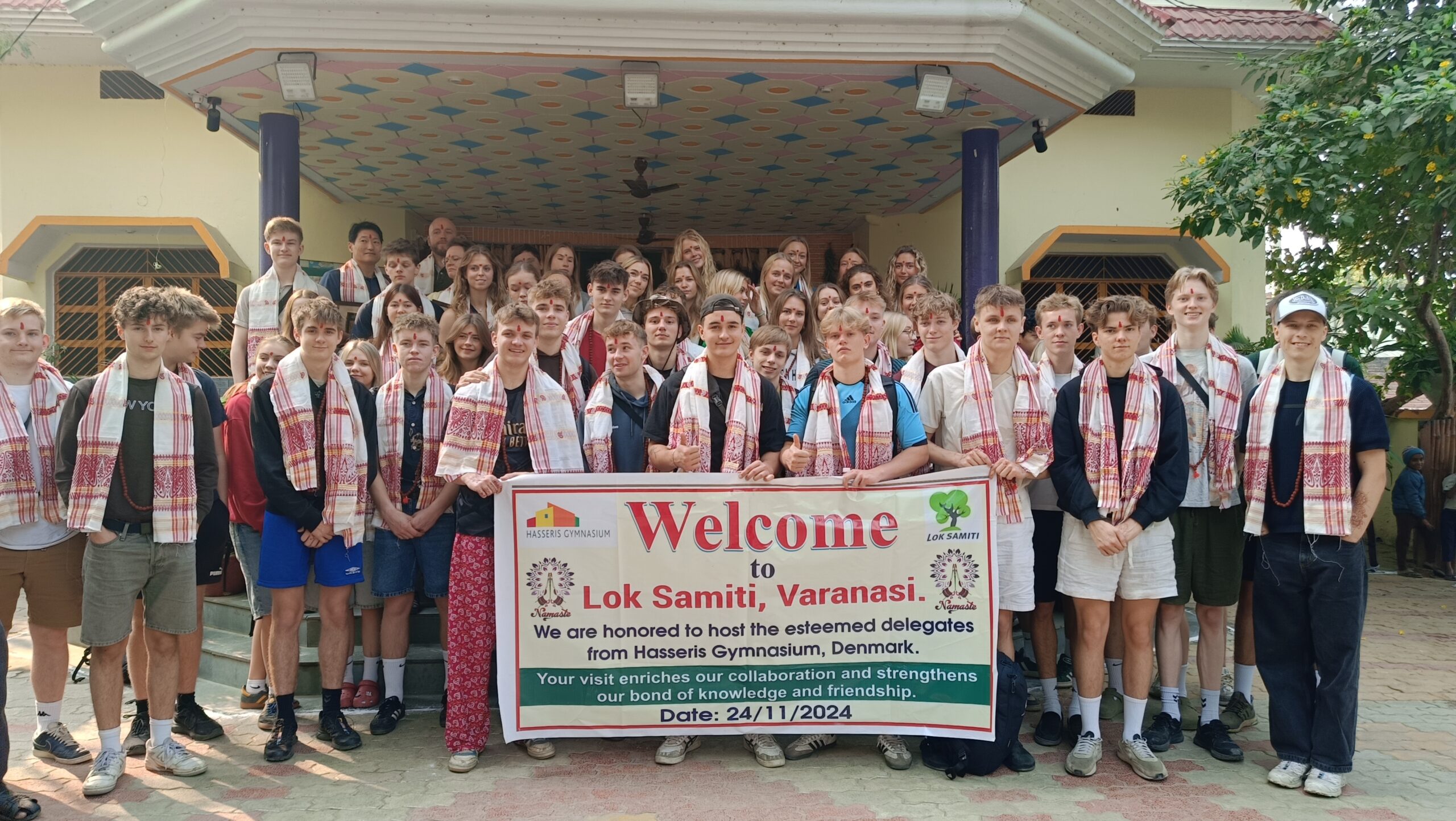
 

Students at Lok Samiti


The Beginning: Excitement Mixed with Nervousness

When I first received confirmation about the group, my initial reaction was a mix of excitement and anxiety. Hosting international visitors was not new to me, but managing a group of 60 people : students and professors together was an entirely different challenge. The expectations were high. This was not a leisure tour. It was an educational immersion. The students were curious, observant, and eager to learn. Their professors were experienced and detail-oriented. I knew that every aspect of the visit had to be carefully thought through.

The biggest concern at the beginning was simple but critical: logistics.

The Transport Challenge: Solving a Complex Puzzle

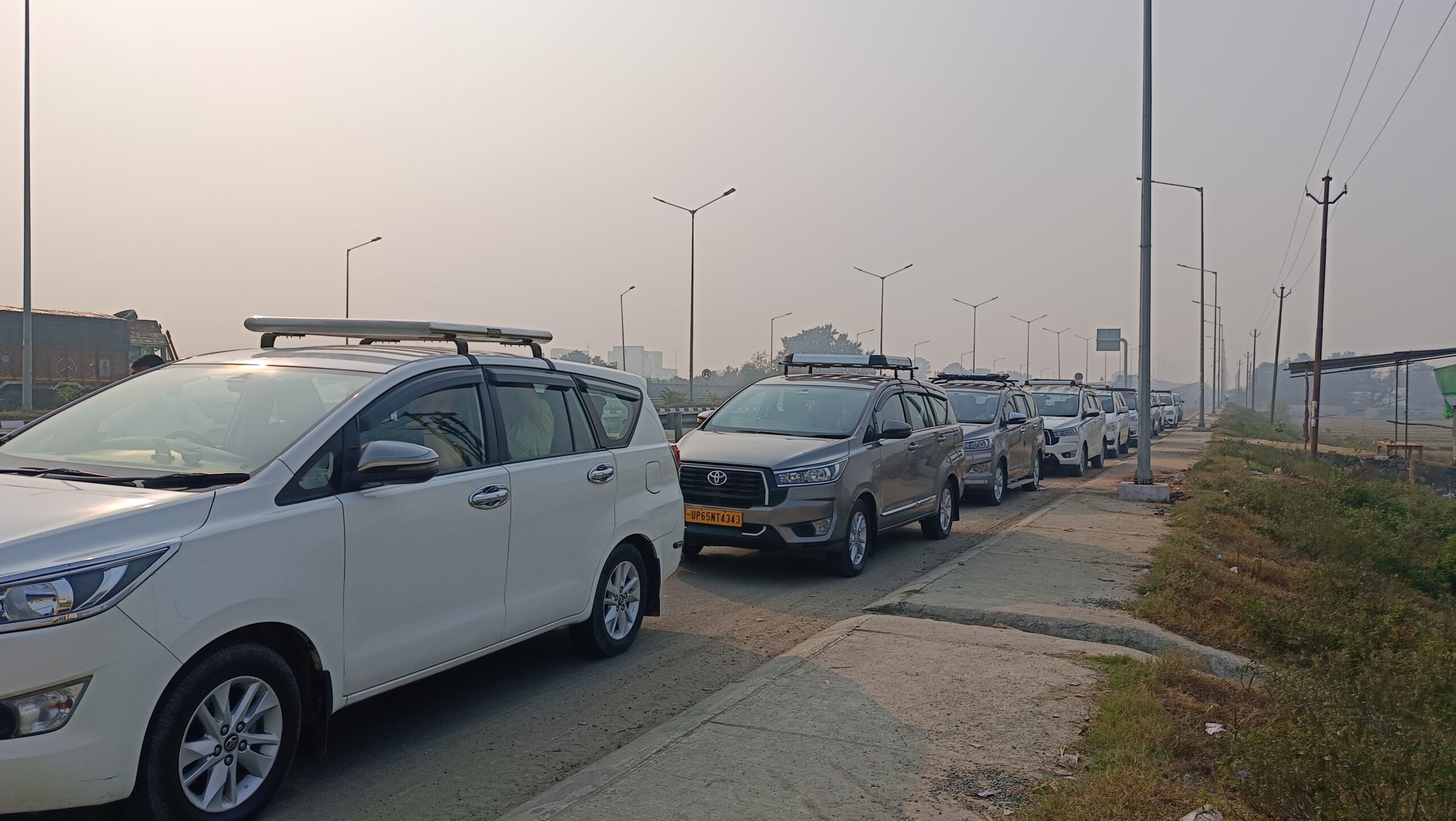
One of the first major hurdles was transportation. The plan was to take the group to Nagepur village, where they would interact with the grassroots organization Lok Samiti and experience rural life firsthand. However, there was a problem. The streets leading into the village were narrow, too narrow for a large bus to navigate comfortably. Bringing a 60-seater bus into the village would not only be impractical but could also disrupt the local environment. After careful consideration, I decided on an alternative solution: instead of one large vehicle, I arranged 15 Toyota Innova Crysta cars.

This decision came with its own complexities:

  • Coordinating 15 drivers
  • Ensuring all vehicles arrived on time
  • Managing group distribution
  • Maintaining communication across vehicles

But it was the most practical and respectful way to access the village without causing inconvenience to the residents. Looking back, this decision set the tone for the entire visit, it was about adapting to the local context rather than imposing external convenience.

Planning with Lok Samiti: Designing an Authentic Experience

A key part of the visit was the collaboration with Lok Samiti, a grassroots organization working in the Varanasi region on issues related to community development, environment, and social justice. I worked closely with Mr. Nandlal Master, the convener of Lok Samiti, to design the structure of the visit. Our goal was clear: we did not want to create a staged or artificial experience. We wanted the students to feel the authenticity of rural India.

We discussed the flow of the day in detail:

  1. A traditional welcome
  2. Refreshments
  3. An introductory presentation
  4. A documentary screening
  5. Village visits and community interaction
  6. A plantation activity
  7. Lunch and discussion
  8. Open Q&A session

Every element was intentional. Every segment had a purpose.
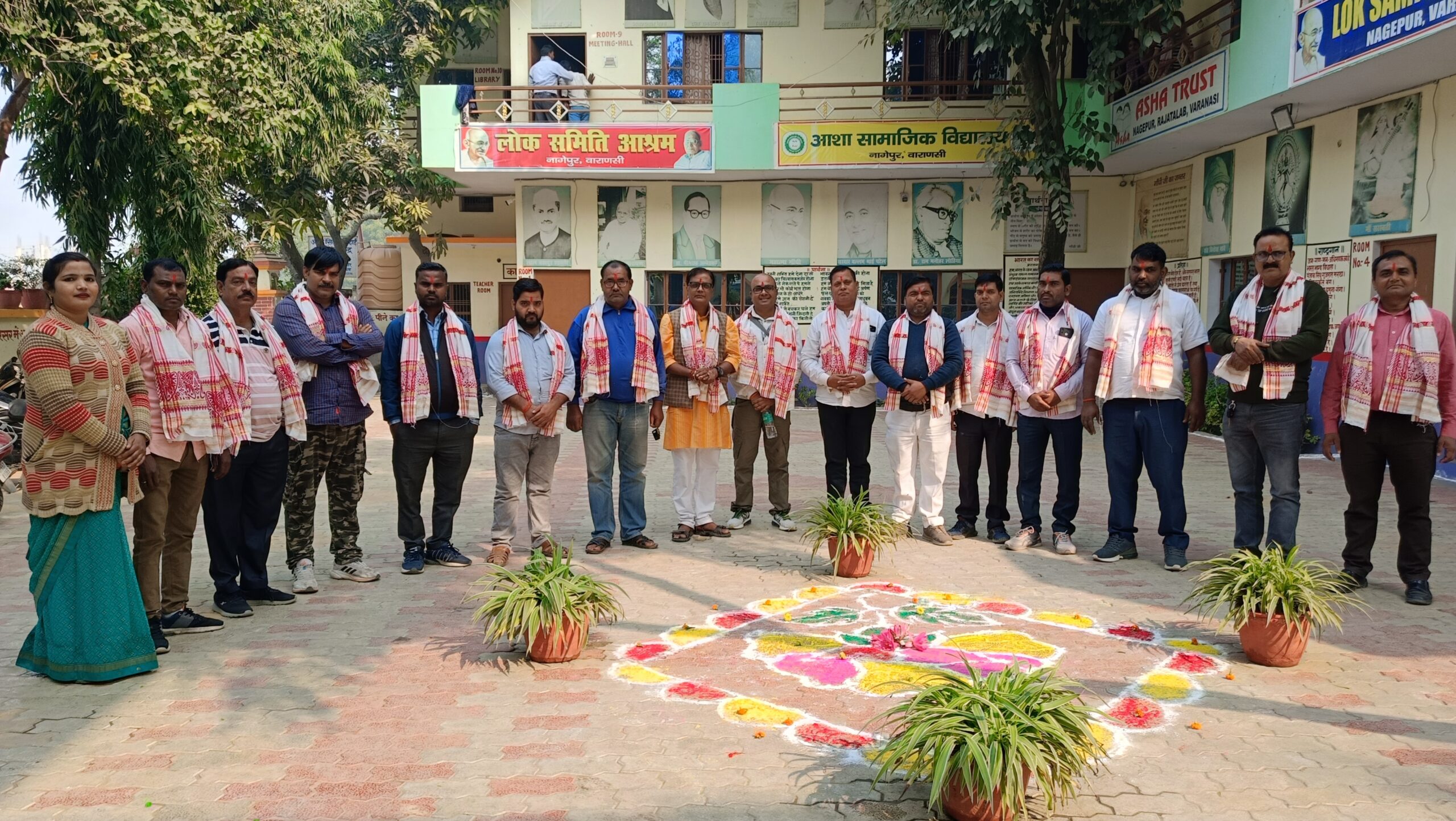
Lok Samiti workers, drivers, Nandlal Master and I


A Warm Welcome: First Impressions Matter

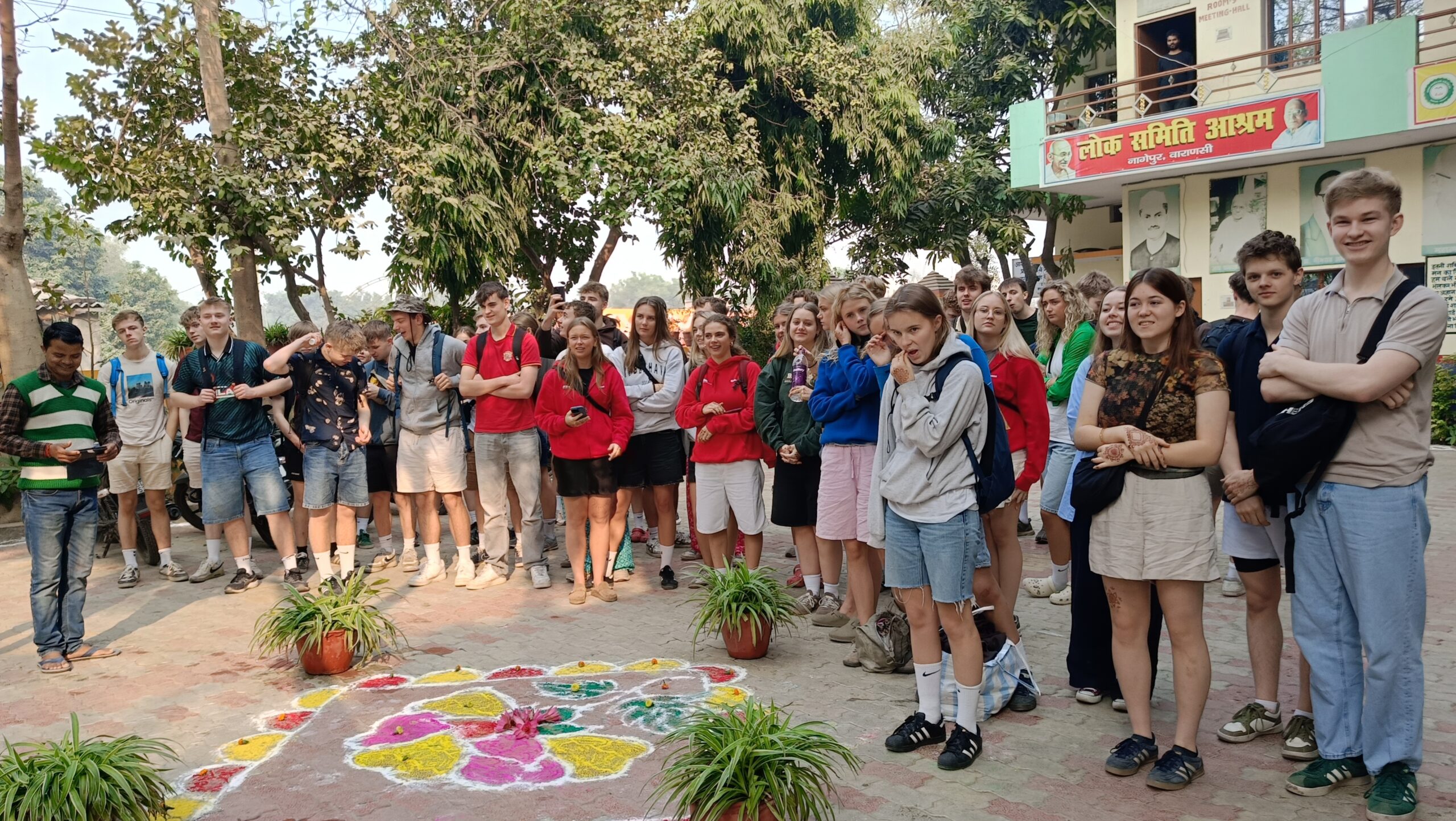
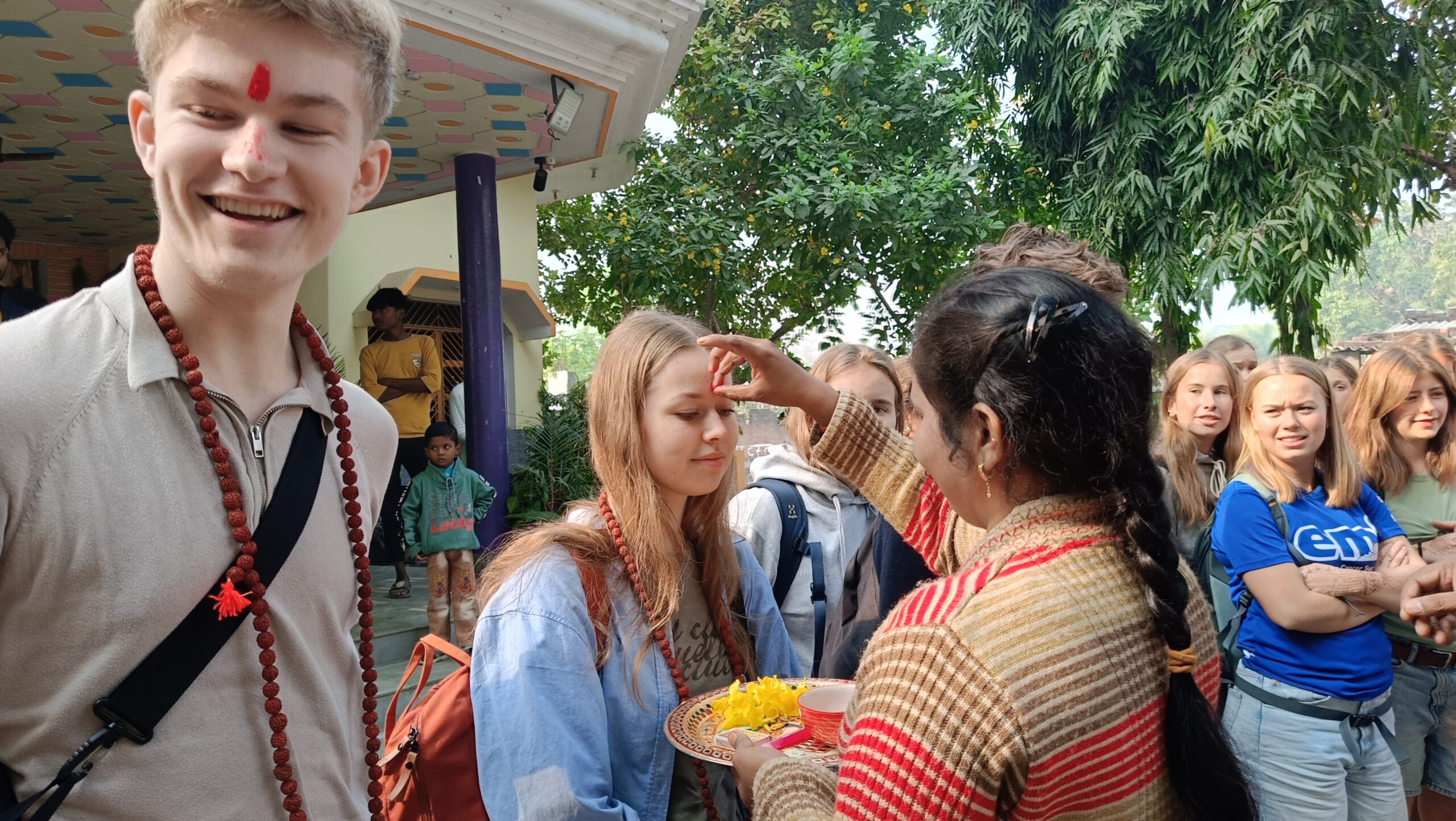
When the group arrived at Lok Samiti, we began with a traditional Indian welcome. Each student and professor was greeted with:

  • A scarf (angavastram)
  • A rudraksha mala
  • A tilak (teeka) applied on the forehead

This moment was simple, yet powerful. It immediately created a cultural connection. For many of the students, it was their first direct experience of such a traditional form of hospitality. You could see curiosity, smiles, and a sense of openness emerging right from the beginning.
Welcome


Refreshments and Settling In

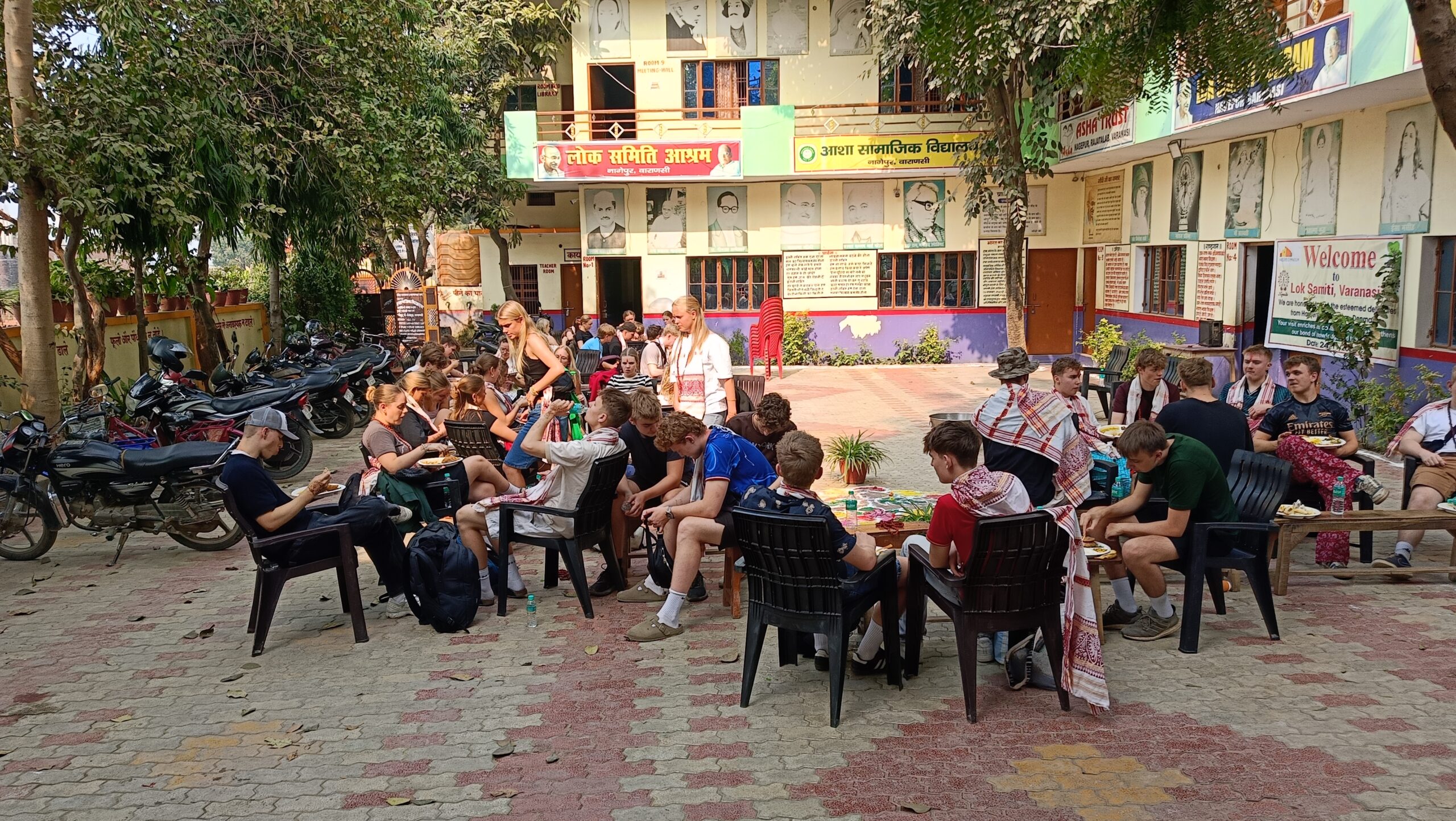
After the welcome, we arranged tea and light snacks. This gave everyone time to relax after the journey and adjust to the new environment. These small transitions are important. They create space for people to absorb their surroundings before engaging in deeper discussions.
Refreshment time


Understanding Lok Samiti: The Indoor Session

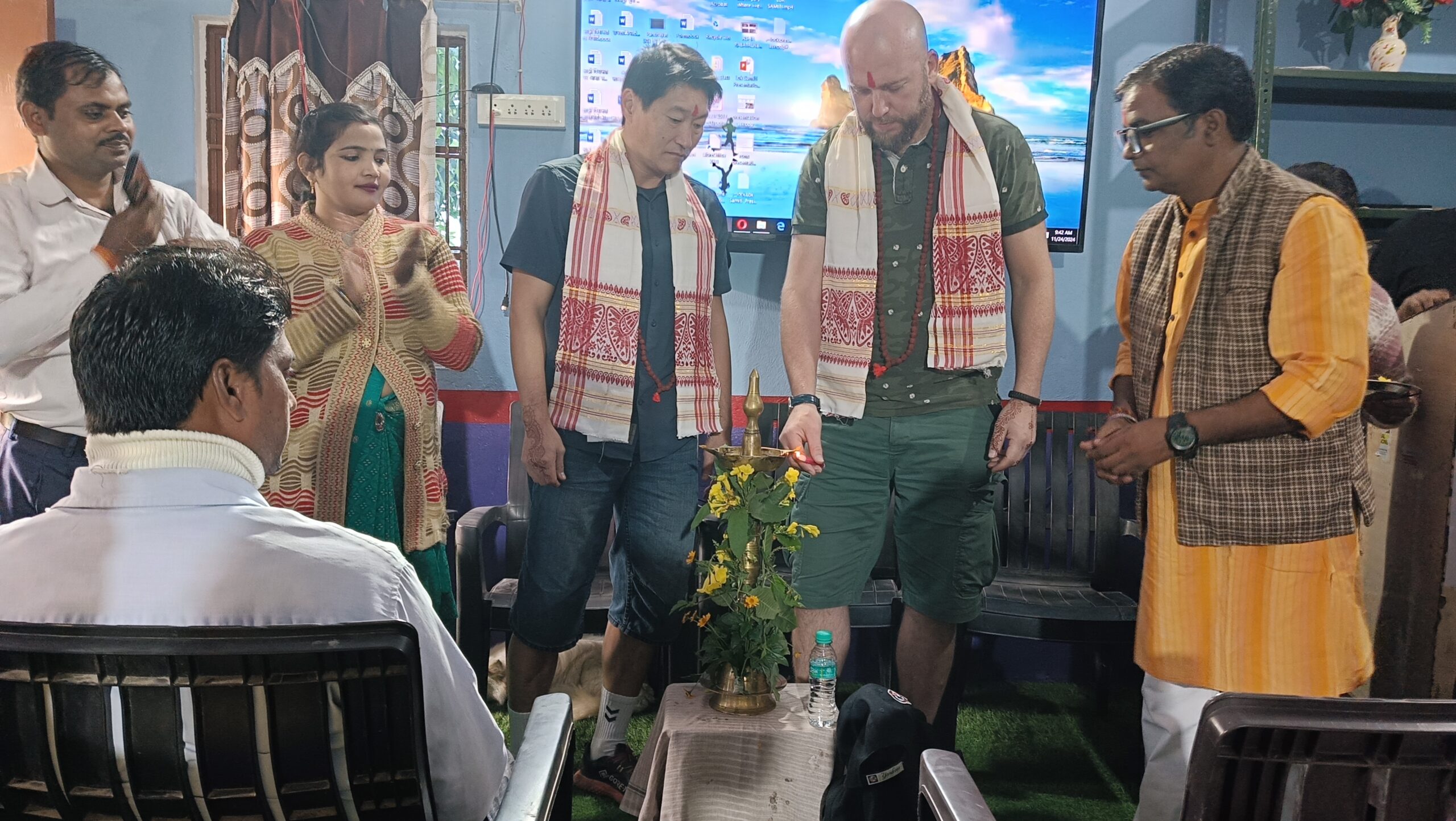
We then moved to an indoor session where the team from Lok Samiti introduced their work.

This included:

  • An overview of their mission and activities
  • Introduction to field workers and volunteers
  • Distribution of informational booklets

The idea was to provide context before taking the students into the field. It helped them understand the social, environmental, and political dimensions of the work being done.
Traditional way to inaugrate the program


The Documentary: A Powerful Story of Resistance

One of the most impactful parts of the session was the screening of a documentary about Lok Samiti’s struggle against Coca-Cola.

The film highlighted:

  • Issues of groundwater depletion
  • Environmental degradation
  • Community mobilization
  • Grassroots activism

The students watched with deep interest. For many of them, this was their first exposure to such a movement in rural India. It also sparked questions that would later shape the discussion sessions.


Into the Village: Real Engagement Begins

After the indoor sessions, it was time to step into the village. Managing such a large group in a rural setting required careful planning. To ensure meaningful interaction, I divided the students into five smaller groups.

Each group was led by:

  • Myself
  • Two additional guides
  • Members of Lok Samiti

This structure allowed for more personal and immersive experiences.


Community Interaction: The Heart of the Visit

My primary focus was community interaction. We organized visits to local homes, where students could:

  • Sit with families
  • Observe daily life
  • Ask questions
  • Understand challenges firsthand

These moments were not scripted. They were organic and often emotional.

The students encountered:

  • Simplicity and resilience
  • Resource limitations
  • Strong community bonds

For many, this was a transformative experience. It shifted their understanding of poverty, development, and dignity.
Community interaction


Plantation Activity: Leaving Something Behind

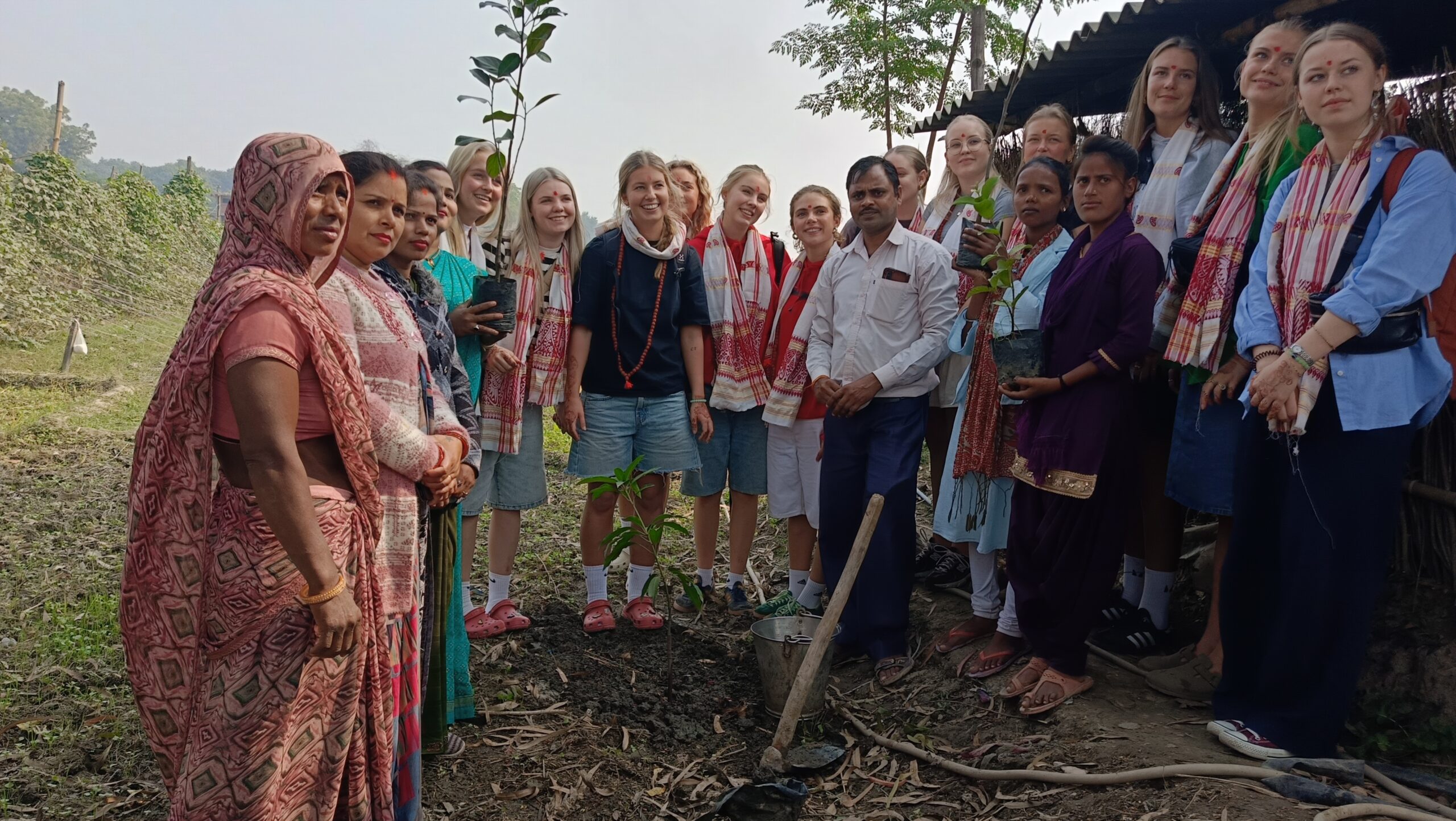
Another important part of the visit was the plantation program. The students actively participated in planting trees across the village. This was not just symbolic, it was a way of contributing to the community. We also requested the villagers to take care of the planted trees, ensuring that this act would have a lasting impact. The activity created a sense of shared responsibility and connection between the visitors and the local community.
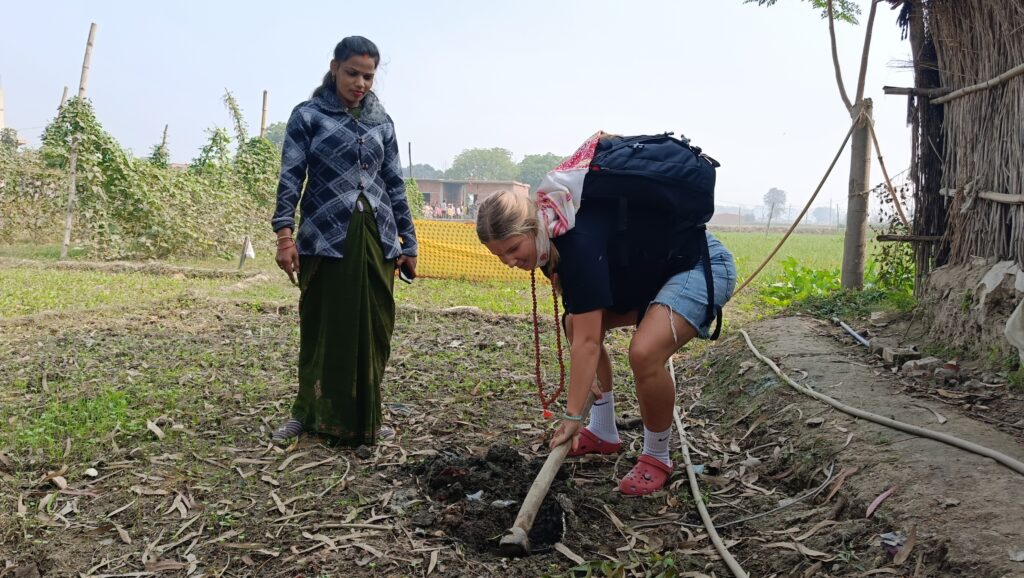
Plantation


Lunch and Informal Conversations

After the village visit and plantation activity, everyone returned to the Lok Samiti office for lunch. This was a much-needed break, but it was also a time for informal conversations. Students discussed their experiences, shared observations, and reflected on what they had seen.


The Q&A Session: Deep and Meaningful Dialogue

Post-lunch, we organized an open question-and-answer session. We invited Lok Samiti workers and volunteers working on various issues to engage directly with the students.

The range of topics covered was extensive:

  • Coca-Cola and environmental concerns
  • Women’s rights and health
  • Education challenges
  • Gender issues
  • Community development
  • Social inequality

The students asked thoughtful and sometimes difficult questions. The responses were honest, grounded, and insightful. This session stood out as one of the most intellectually engaging parts of the visit.
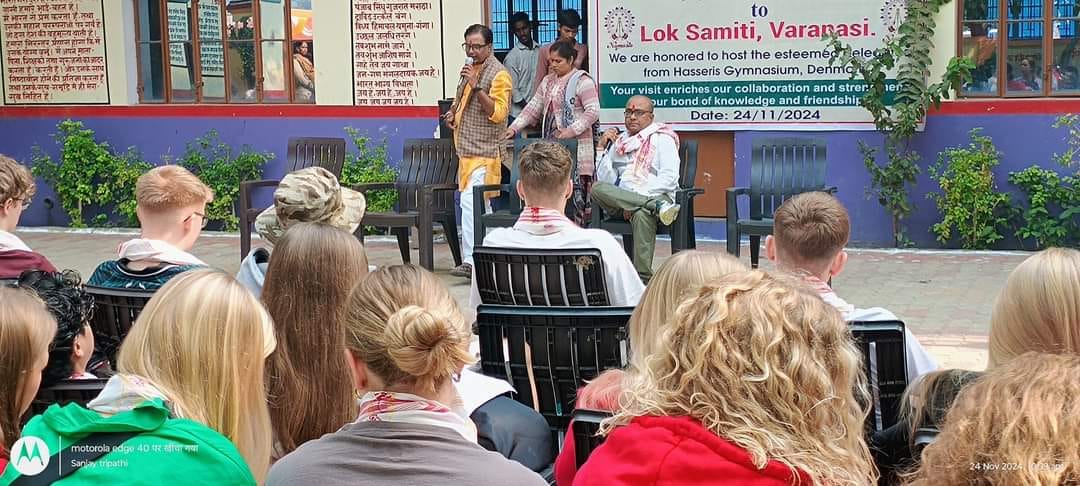
Question and Answer session


A Joyful Ending: Music, Dance, and Connection

Before concluding the visit, something beautiful happened. The students from Denmark and the children studying at the Lok Samiti school came together in a spontaneous celebration of music and dance. There was laughter, energy, and pure joy. Moments like these go beyond language and culture. They create human connections that are difficult to describe but impossible to forget.
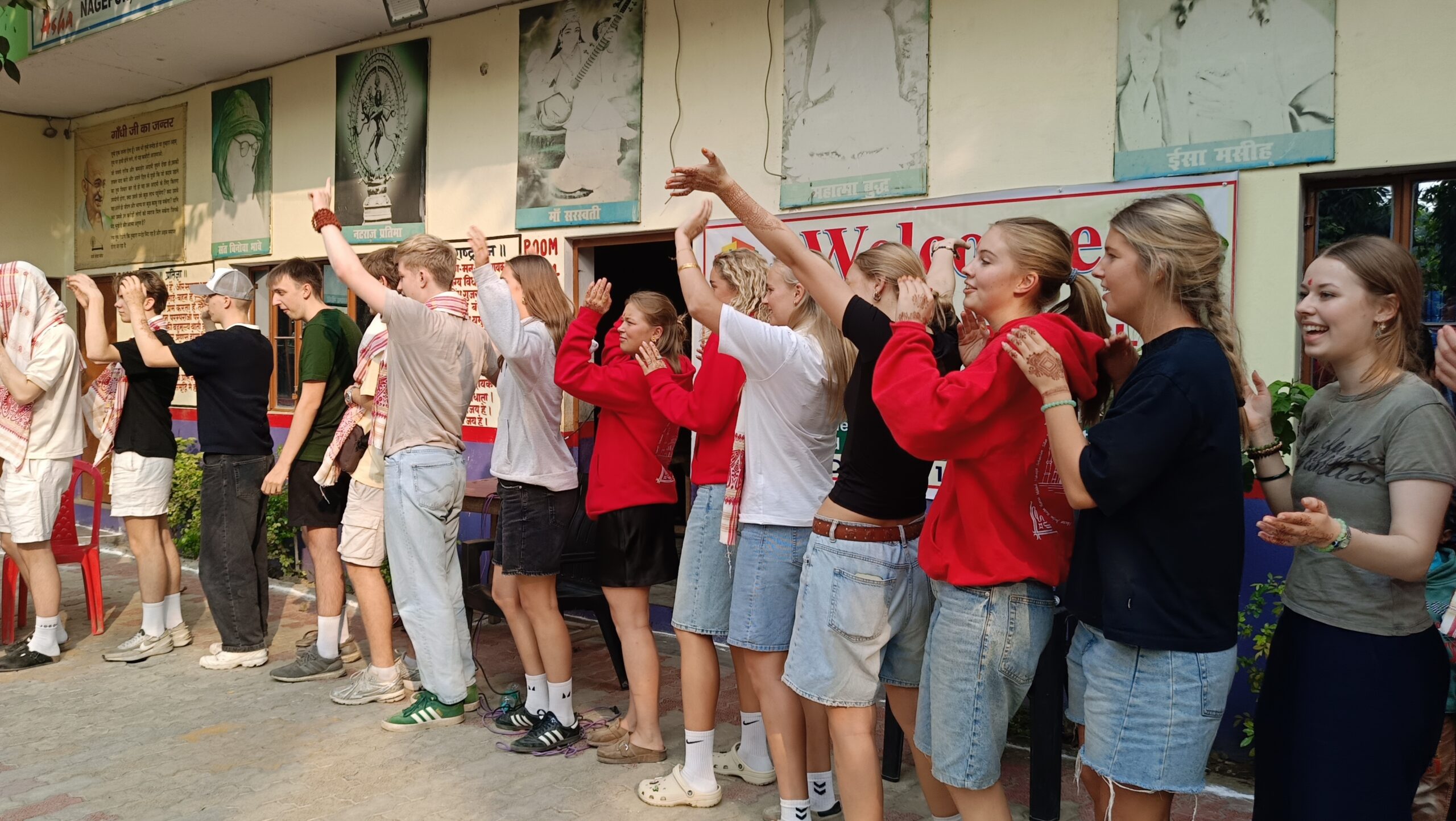
Students dancing


Acts of Kindness: Gifts and Support

The visiting students had brought gifts for the children at the Lok Samiti school. These were distributed, bringing smiles and excitement. In addition, they made a financial contribution. I later used this donation to purchase sweaters for all 550 children studying at the school. This gesture ensured that the impact of their visit would continue beyond a single day.


When the Plan Changes: Unexpected Challenges

Just when I thought the day had ended successfully, a new challenge emerged. The program coordinator informed me of sudden changes:

  • Their hotel had been changed at the last moment
  • Their train had been cancelled
  • They would now travel to Delhi by bus

This raised several concerns. From my experience, certain things did not add up. For example:

  • Booking 60 first AC train tickets together is highly unusual
  • Changing a five-star hotel after one night seemed suspicious

It appeared that there might have been some mismanagement or possibly a scam by their travel agent. However, at that moment, my role was not to investigate but to support.


Another Challenge: Arranging Dinner for 60 People

The group then requested packed dinner boxes for their journey. This was not a simple task. The key concern was food suitability. Many international visitors are not accustomed to spicy Indian food, and I wanted to ensure that the meals were comfortable and safe for them. I reached out to my niece, who runs a kitchen, and explained the situation. She prepared meals specifically tailored for the group : mild, balanced, and suitable for their taste. Coordinating the preparation and delivery of 60 meal boxes on short notice was challenging, but it was completed successfully.


The Final Stretch: Ending on a Positive Note

Despite the unexpected complications, everything was eventually managed. The group departed safely, well-fed, and satisfied. For me, it was a moment of relief and quiet satisfaction.


Reflections: What This Experience Meant to Me

This entire journey was more than just an assignment.

It was:

  • A test of my planning and problem-solving abilities
  • A lesson in adaptability
  • A reminder of the importance of cultural sensitivity
  • A reaffirmation of the value of grassroots engagement

I started the day feeling nervous about handling such a large group. I ended it with confidence, experience, and gratitude.


Looking Ahead

This experience has opened new possibilities. I look forward to working again with Hasseris Gymnasium in the future and continuing to create meaningful, educational, and responsible travel experiences. Because in the end, what matters is not just showing places but creating understanding.


Real journeys are not about destinations. They are about connections, challenges, and the stories we carry forward.


Juna Akhada Peshwani

In Hinduism, Akhara (also akhada) is an association of the different sects of Yogis, also known as Sadhus (Hindu Renunciates). Its history dates back to the eighth century when Adi Shankaracharya established seven Akharas. Some yogis revere Gorakhnath as the founder rather than Shankaracharya. The 7 ancient Akharas are Mahanirvani, Niranjani, Atal, Avahan, Agni and Anand Akhara. Today there are 3 major Akharas (Juna, Mahanirvani and Niranjani) and 3 minor Akharas (Atal affiliated with Mahanirvani, Anand affiliated with Niranjan). Traditionally during the Kumbh Mela, the Naga Sadhus, and the ‘Akharas’, lead and initiate the bathing rituals, before the general population steps in.

Since these group of Sadhus reside in different parts of India, they all have to gather together and then they follow the festival or whatever the reason could be. There is also something very important process of participating in the festival which is called Peshwani. Basically Peshwani is a procession organized to show the official arrival of a group of Sadhus in a city. The same Peshwani was organized by Juna Akhada in Varanasi during Kumbh Mela 2013. I had heard a lot of Peshwanis but had never seen one but luckily this year I got an opportunity to see it. I made a video also which Peshwani of Juna Akhada in Varanasi on 2nd of March 2013 :

Won Citizen Journalist award

I had exposed a scam in ticking at Sarnath in Varanasi with help of CNN IBN in September 2011. There was a huge scam of reselling of entry tickets was going at Sarnath and I exposed it and as an impact of my report the corrupt government officers were suspended and a reliable system of ticketing was introduced. For this work I was nominated as Citizen Journalist of the year and finally won the award. The selection process of journalists was divided into two parts- First Phase – when the IBN18 Editorial Board generates a list of nominees in the category of Citizens against corruption and Second Phase – which was based on an online voting on www.ibncj.com.

The award event was organized at the Taj Palace Hotel in New Delhi. CNN IBN arranged my flight tickets, hotel and other facilities in New Delhi. The Taj Palace Hotel was just awesome, I was really surprised to see the luxury. Anyways, the event was nicely organized and chief guest of the program was Vidya Balan. When I looked at her first, I just thought that I had seen this girl somewhere because there was a huge difference between the face I see on TV and face sitting in front of me. It again proved that there is a huge difference between real and reel life:)

The event was a delayed by an hour and half but I was not surprised at all as I experience such thing all the time. There were other people also who were nominated and I got to talk with a few of them. It was nice talking and listening to the people who were fighting against corruption. There was a guy from Sonbhadra who was shot, but luckily survived, only because of his fight against corruption in government schemes. I met one other guy who from India-Pakistan border area in Rajasthan who was attacked and beaten so hard that he could not walk properly anymore.

It was a shock to see what could happen if you start fighting against corruption. Anyways, finally my turn came. They showed my story on a big screen, called me on the stage and gave me an award for my fight against corruption in tourism industry. The award was presented by Vidya Balan herself. It was really a nice feeling to get such honor. I had never thought that such thing would ever happen with me. The award motivates me to keep my fight on.

Nandan and Vidya Balan

Vidya Balan gives me the 2012 Citizen Journalist award


Shivratri in Varanasi

Girls playing Goddesses

Shivratri is the wedding anniversary of Lord Shiva and the biggest festival in Varanasi. This year, it was celebrated on the 30th of March. The date is determined by the Hindu lunar calendar, so it changes every year. As per the calendar, Mahashivaratri falls on the fourteenth day of the dark fortnight of Phalguna (February/March). I had always wanted to document this festival, and this year I finally got the opportunity. Several temples in Varanasi organize a wedding parade of Lord Shiva on Shivratri. I went to a very big temple called Mahamrityunjay Temple, which is famous for its parade.

Girls playing Goddesses

The ghosts

I tried to contact the mahant of the temple, who was supposed to be one of the organizers, or at least an important member of the committee. But to my surprise, he told me straight away that he didn’t know anything about who was organizing it. I was shocked. I then asked several other people at the temple, but nobody seemed willing to say who was behind the event or who I should approach to get filming permission. Very strange people. I spoke with at least 20 people, and the response was always the same—they didn’t know who was organizing the parade.

The ghosts

Goddess Shitla

Finally, I gave up on this temple and went to another one called Tilbhandeshwar Temple, which is also one of the biggest Shiva temples in Varanasi. The people there were much more helpful. They gave me all the information I needed and permitted me to come on the festival day and film inside the temple. I was really happy to have their permission. I arrived on the festival day around 8 am and was surprised to see that preparations had already been underway for a long time. Hundreds of people were at the temple, dressing up and getting ready for the parade.

Goddess Shitla

Baby Shiva

Since the festival is so important to the people of Varanasi, everyone wanted to participate. A committee was formed to choose the right characters for the parade. There were all kinds of characters, including gods, goddesses, demons, and ghosts. This was because Shiva is believed to have all kinds of followers—even ghosts and demons—who also took part in his wedding. The atmosphere was truly amazing, full of excitement and energy.

baby Shiva

Makeup

There were four makeup artists working non-stop on the characters, and there was always a line of people waiting for their turn. My friend Lane, from Seattle, had come with me just to watch the parade but ended up playing Parshuram! The organizers were so delighted to see a foreigner that they asked him if he’d like to be part of the parade, and as usual, Lane agreed. I interviewed several characters, and the best conversation was with the man playing Lord Shiva. He was fascinating. He told me he had been playing Shiva for the past eight years. When I asked why it was always him, he explained that he takes the role very seriously and calls Lord Shiva into his body, which earns him respect from the community. People actually want him to play Shiva year after year.

makeup

Lord Shiva on his horse

Even more interesting was the fact that his whole family was involved. His real son was playing baby Shiva. After his makeup was done, the man playing Lord Shiva went to the temple for blessings. This is the moment when he is believed to invite the spirit of Shiva into his body. The parade began right after this. All the characters rode on different animals and horses as the procession moved through many neighborhoods. I don’t know how, but thousands of people joined the parade. There was loud music, people dancing, snake charmers performing, and firecrackers going off everywhere to celebrate.

Lord Shiva on his horse

Free bhang

There were also free bhang stalls. Since bhang is traditionally offered at Shiva temples, it was distributed as a blessing. The parade lasted more than four hours before finally returning to the Tilbhandeshwar Temple around 6 PM. Once back at the temple, the man playing Shiva performed a symbolic wedding ceremony with his real wife, representing the marriage of Shiva and Parvati. After the rituals, the event concluded. It was incredible to see how people treated the characters as if they were the deities themselves. Many touched their feet in reverence. I was thrilled to have documented the whole event—and yes, I filmed it too! So happy to have experienced it.

free Bhang


Kolkata Gay Pride 2010

Beginning of the Parade

I had the opportunity to attend Kolkata Gay Pride on the 2nd of July. I arrived in Kolkata on the 1st, after attending Chennai Pride and spending a few days in Bangalore. My friend Sourendra from Mumbai introduced me to Mr. Rajshree Chakrobarty, Secretary of the Dum Dum Society and one of the organizers of Kolkata Pride. I knew that Kolkata was the first city in India to host a pride march, so I expected it to be the biggest one this year as well. But when I reached the parade venue, I was shocked to see that there were hardly 50 people present.

Begining of the parade


Mr. Chakrobarty Explains

Before I could even ask, Mr. Chakrobarty told me why the turnout was so low. He explained that most of the organizations working on gay rights in Kolkata had boycotted the parade due to internal politics. As a result, only the Dum Dum Society and another group called Anandam organized the event this year. I was surprised to hear this but also glad that at least someone took the initiative to keep the parade alive.

Mr. Chakrobarty


The Parade

The parade began at Jatin Das Park near Hazra Crossing and ended at the Academy of Fine Arts. It started with around 40–50 participants but was lively and full of energy. Having attended several pride parades in India over the past year, I found Kolkata’s to be the most liberal and open. Nobody wore masks to hide their identity. An auto rickshaw with loudspeakers led the march while participants sang songs about human rights, equality, and gender justice. They also distributed pamphlets about LGBT rights.

Good message


Growing Numbers

It rained for most of the march, but that didn’t stop people from joining. By the time we reached the Academy of Fine Arts, the crowd had grown to over 100 participants. The most inspiring moment for me was seeing so many young lesbian couples join towards the end. I had never seen so many lesbians at a pride event in India—not in Mumbai, Delhi, or Chennai. What struck me most was their age: they were very young, unlike the older women I had usually seen. These young women knew their families would find out if they marched publicly, but they still chose to participate. That level of openness and courage really impressed me.

Very colorful event


Speeches and Performances

At the Academy, the parade concluded with speeches by Mr. Ranjeet Sinha, Mr. Rajshree Chakrobarty, and other social activists. Later, I joined Mr. Chakrobarty for a cultural program organized by Saathi, which provided a platform for the LGBT community to showcase their talents. The program included dance performances, fashion shows featuring designs created by LGBT members, and traditional Kolkata songs. I was amazed by the quality of the performances. The municipality chairman attended as the chief guest, and the event drew a crowd of nearly 500 people—much larger than the parade itself.

Cultural dance performance


Learning from Kolkata

During my time there, I interviewed Mr. Chakrobarty, Mr. Ranjeet Sinha, and several others from the community. Mr. Chakrobarty told me that gay activism in Kolkata began as early as 1989, making it one of the first cities in India to do so. Today, there are about six or seven organizations working on LGBT rights in the city. He explained that conditions for LGBT people in the city are better than in suburban or rural areas, largely due to greater media presence and more active organizations. However, compared to Mumbai and Delhi, life in Kolkata is still more difficult, as it is the poorest metropolitan city in India.

the most important message


Discrimination and Social Challenges

Mr. Chakrobarty also pointed out that transgender people face the harshest discrimination because their identities are more visible. He emphasized that while all LGBT individuals face discrimination, trans people often bear the brunt of it. We also discussed the common misconception in India that homosexuality is a disease or a temporary fashion—something that can be “cured” by marriage or yoga, as suggested by figures like Baba Ramdev. Like others I have interviewed, he firmly said this is impossible: sexuality cannot be changed. Many gay men marry under family pressure but continue same-sex relationships, proving that marriage is not a solution.

She was very active

He also reminded me that homosexuality has always existed in Indian culture, citing references in Hindu scriptures, temple carvings, and even stories from the Ramayana. He noted that Section 377 was a colonial law imposed by the British, and that the Delhi High Court’s judgment to strike it down was a step toward justice.


Meeting Mr. Ranjeet Sinha

I also had the privilege of meeting Mr. Ranjeet Sinha, a transgender activist working in Kolkata and surrounding districts. He shared the struggles trans people face, including the lack of recognition in official documents like passports and voter IDs. He spoke about the humiliation trans people often face in public toilets and demanded separate facilities. He also told me about a transgender activist friend with AIDS who was forced by doctors to dress as a man before being admitted to the hospital. Mr. Sinha criticized NGOs for focusing solely on HIV/AIDS and neglecting broader issues affecting the transgender community. He praised South Indian states, especially Chennai, for making more progress on transgender rights.

Good slogan


Final Thoughts

Kolkata Pride may have been smaller this year, but it taught me so much. I was deeply inspired by the courage of the young participants, the dedication of people like Mr. Chakrobarty and Mr. Sinha, and the resilience of the community despite internal challenges. I sincerely hope that next year, all organizations will put aside their differences and come together to make Kolkata Pride as strong and vibrant as it deserves to be—a true celebration of equal rights for all.

He had a lot of fun

Chennai Gay Pride 2010

Chennai Gay Pride – June 27

It was Chennai Gay Pride yesterday, on the 27th of June, and I went to attend the festival. The event wasn’t as large as I had expected, but it was still significant enough to attract attention from the local community and raise awareness about LGBTQ+ issues. I was expecting at least 1,000–2,000 participants, but the turnout was closer to 400–500. The parade began near the Labor Statue at Marina Beach at 5 PM and lasted for over an hour. It was organized with the support of several organizations working for LGBTQ+ rights in Chennai, with Shakti Center being one of the most prominent names involved.

Foreign participants

The Parade Atmosphere

The participants seemed genuinely happy and energetic, especially those from the LGBTQ+ community. Unlike the Delhi and Mumbai Pride parades, which had loud music and people dancing, Chennai Pride didn’t feature music. Still, participants sang songs in Tamil (which I couldn’t understand), laughed, danced, and hugged each other with joy. I noticed that there were fewer lesbian couples compared to Delhi and Mumbai, and overall the atmosphere felt a little less open. In Delhi and Mumbai, many participants walked hand in hand with their partners, making their relationships visible. In Chennai, however, most people seemed more reserved, perhaps reflecting the city’s more conservative, religious outlook.

People from the organizing committee

Conversations with Organizers

I spoke with one of the organizers who told me that last year’s parade had more people, but many were outside supporters. This year, though the crowd was smaller, more members of the community itself participated—which he considered an important step forward. Since the parade took place at Marina Beach, a popular weekend spot, thousands of locals watched. I handed out pamphlets and masks to curious onlookers. Interestingly, the use of masks was much higher here compared to Delhi and Mumbai. Some participants even wore two or three masks at once to completely cover their faces. When I asked them why, they explained that Chennai is still very conservative, and they didn’t want to risk being recognized.

There were families also

Attitudes and Challenges

Many participants expressed concern about how society perceives them. Some said, “If people see us in the parade, they’ll think we’re gay too.” This showed how stigma and fear of judgment still run deep here. I also spoke to Mr. Annirudhan Vasudevan, one of the parade organizers. He admitted that while the Delhi High Court’s decision to decriminalize same-sex relations had brought some change, it wasn’t enough to transform society. He said, “At least people are talking about it now. They know that something called the LGBTQ community exists and that we too have rights.”

I also think so

Annirudhan stressed that discrimination is widespread across India, and the community needs legal protection, medical care, and equal rights. He also highlighted the tragic case of Prof. Srinivas Siras from Aligarh Muslim University, who was suspended after being filmed in a private moment with a same-sex partner. The humiliation pushed him to take his own life, despite homosexuality being legal. This conversation made me realize how much more progress is needed—not just in laws, but in changing public attitudes.

Mr. Annirudh

The Pride Party

The night before the parade, there was a party at a four-star boutique hotel, Le Waterina, at Kotivakkam Beach. It was the most expensive Pride party I’d attended in India. Entry in Delhi was free, and in Mumbai it was ₹500 with reasonably priced drinks. In Chennai, the entry was ₹500, but drinks were very costly. At the party, I met locals who didn’t even know about the parade but had been invited to the event via SMS. Some hesitated to talk about the parade, reflecting again how cautious people are about revealing their identity. Still, I saw many of them at the parade the next day. One highlight of the party was a male go-go dancer—a first for me. Dressed in shorts and later removing his T-shirt, he performed for over an hour, and the crowd went wild. His presence added a new level of excitement to the celebration.

Go-Go dancer at teh party

Final Thoughts

Despite the challenges, I was glad to be part of Chennai Pride. The event showed both the struggles and the resilience of the community here. I hope that with time, Chennai Pride will grow larger, attract more supporters, and become more open—just like in Delhi and Mumbai. One thing is clear: LGBTQ+ rights will not advance without support from allies. It is our responsibility, as straight people, to stand with the community and help create a more equal world.

My friends and I

More Pics:

https://photos.app.goo.gl/wHjjzmTWsTcVn2xVA

Holika 2010

Holika Dahan is a festival celebrated on the eve of Holi, which took place on February 28th this year. Unfortunately, I was unable to attend the festivities. This festival has a fascinating story behind it. According to the legend, there were two Asura brothers named Hiranyakashyapu and Hiranyaksha, who were notorious for their malevolence and persecution of religious people. Eventually, Lord Vishnu killed Hiranyaksha, becoming the arch-enemy of Hiranyakashyapu. After some time, Hiranyakashyapu performed severe penance and pleased Lord Vishnu, who appeared before him and granted him a wish.

Hiranyakashyapu requested immortality, but Lord Vishnu told him that everyone born must eventually die. Therefore, Hiranyakashyapu made a more cunning request: he asked for a boon that neither a human nor an animal could kill him, neither during the day nor at night, neither on earth nor in the sky. Lord Vishnu granted this wish, and Hiranyakashyapu began to exploit his newfound powers, tormenting innocent people, prohibiting religious practices, and declaring himself a god. Hiranyakashyapu had a son named Prahlad, who was a devout follower of Lord Vishnu. Despite his father’s strong opposition and attempts to force him to renounce his faith, Prahlad remained steadfast in his devotion.

Frustrated, Hiranyakashyapu attempted to kill Prahlad by throwing him into the ocean and abandoning him in the jungle, but Prahlad miraculously survived both attempts and returned home each time. Prahlad’s aunt, Holika, had a boon that made her immune to fire. She agreed to help Hiranyakashyapu by taking Prahlad to a pyre of wood. Holika sat on the pyre with Prahlad, believing that she would remain unharmed while Prahlad would be consumed by the flames. However, a miracle occurred: Holika burned alive, while Prahlad emerged unscathed. This event is commemorated during Holika Dahan, where people build a bonfire, place an effigy of Holika and Prahlad, and burn it.

On the day of the festival, people traditionally apply a mustard paste to their bodies, and the residue is then discarded into the bonfire. This practice symbolizes the removal of sins and the renewal of body and soul. However, this festival has become an environmental concern due to the practice of cutting down green trees for the fire. This year, for the first time, I saw a group of students educating people about the environmental impact of cutting down trees for the festival. While I support this cause, I doubt that change will come easily.

Benares, already suffering from a lack of greenery, is not alone in this issue; it’s a global problem. For instance, it’s reported that China cuts down over 25 million trees annually to produce chopsticks, and India has lost over 75% of its forests. If such practices continue, the future looks bleak. Education and awareness are crucial to addressing this issue, but the challenge lies in finding effective advocates for change. While we cannot stop the festival, we can reduce its environmental impact by using alternative materials instead of green trees. Please, let’s stop cutting down green trees and instead focus on planting new ones.

Holika Dahan Fire

Shivratri 2010

It was Shivratri on the 12th, and I was incredibly excited for it. Shivratri is the biggest festival in Varanasi, celebrated as the wedding anniversary of Lord Shiva. There are over six thousand temples in Varanasi, but only 11 of them organize a wedding parade for Lord Shiva. The parade begins at various temples and culminates near the Vishwanath Temple (the Golden Temple). The most popular and grandest parade starts at the Mahamrityunjay Temple and is the final parade of the day. I attended the parade with my friends, and it was absolutely amazing.

Lord Shiva and Parvati

Bhang, which is associated with Lord Shiva and an integral part of Varanasi’s culture, is consumed by many people during the festival as a blessing from Lord Shiva. People take a bath in the Ganges, perform rituals at Shiva temples, offer bhang, and then consume it. The entire city is decorated with lights, free bhang drinks are served everywhere, and people come out to join the festivities. It’s so much fun—I love this festival. It is said that during Lord Shiva’s wedding, a diverse array of characters participated, including gods, goddesses, ghosts, demons, and more. Consequently, the wedding parade featured all sorts of characters.

The parade included people wearing ghost masks, individuals dressed as gods and goddesses, snake charmers, hijras, and various animals like cows, bulls, goats, dogs, horses, and elephants. There were people smoking ganja, and the scene was quite chaotic. One man dressed as Lord Shiva was leading the parade. He was extremely high on bhang, almost sleeping while walking. I had seen the same man in last year’s parade, and I suspect he was deliberately given a lot of bhang, as he was also nearly unconscious last year. He struggled to walk, would occasionally faint, and either walked slowly with his eyes closed, danced, or fainted. I doubt Lord Shiva fainted at his wedding, but Varanasi’s bhang certainly has that effect on people!

ghost

The man carried a trident and a damru, and wore a dhatura garland. He performed the Tandav dance for a short time, then would faint. As he fainted or fell asleep, people chanted “Har Har Mahadev” (a chant for Lord Shiva) and “Jago Baba” (meaning “wake up, baba”) to rouse him. The noise from thousands of people shouting “Har Har Mahadev” was deafening, and I thoroughly enjoyed it. I’m not sure how anyone can survive after consuming so much bhang, but he seemed to be holding on.

Character playing Lord Shiva fainted due to intoxication of Bhang

The festival featured loud music, with drums playing everywhere, but I particularly enjoyed the Nagada drum. The Nagada is a traditional Varanasi instrument used in both wedding and funeral parades. We take pride in our Nagada performances. Josh, wanting to try bhang, bought a glass of bhang lassi without consulting me. He expected it to have an immediate effect like alcohol, but bhang takes time to work. Later, he asked me for more bhang lassi, so I took him to a reputable shop, not realizing he had already consumed some.

Bhang Thandai

After drinking more than half a glass of bhang lassi, Josh said it wasn’t making him high, and I explained it would take some time. He asked how long, and I told him at least two hours. He then revealed he had already drunk a glass of bhang lassi an hour earlier. I advised against drinking a second glass, but he insisted he could handle it. Although I knew two glasses of bhang were too much, he believed he’d be fine. It’s been over 48 hours since his second glass, and he’s still asleep in his room. When I asked if he would ever drink bhang again, he said never.

elephants were also there

Many documentaries have been made about Varanasi and its festivals, but none focus specifically on this one. I had planned to film the festival but couldn’t due to my commitments with Josh’s project and a lack of resources. Now, Josh wants to help me make a documentary about the festival, and I’m really looking forward to it. I’ll do my best to capture the essence of this festival, and I’m sure it will be a lot of fun. The festival is over now, and I’m already excited for next year. Har Har Mahadev!

Lord Shiva

Delhi Gay Pride 2009 – afterparty

Megan and Adam were running late, so I told them to head off while I stayed behind for the party. I wandered around and eventually stopped at a bus stop, where I sat for a while. Two people, who seemed to be from rural areas, came and sat next to me. It appeared that they had also witnessed the parade and were discussing it. One of them was visibly angry about the parade. He was cursing the government and the event organizers, expressing his frustration that people were openly mocking Indian culture and that the government was allowing it.

His remarks suggested he hadn’t explored the historical and cultural aspects of Indian traditions. For instance, the *Ramayana* includes references to hijras with practices similar to those of modern gays, the *Kamasutra* discusses homosexuality, and the temples at Khajuraho feature numerous sculptures depicting same-sex relations. It seemed clear that his views were influenced by a limited understanding of Indian cultural and historical context. I haven’t visited Khajuraho, but I have read the Ramayana and looked at the Kamasutra. From these sources, it seems that India has a very old gay culture, which was accepted in society but became criminalized by the British.

After spending an hour wandering around, I returned to the place where the bus was supposed to start from. There, I met a 20-year-old student from Delhi University. I was sitting near the bus when he came over and sat next to me. He said that attending the parade had made him feel more confident and open. He mentioned that he had been shy before the parade, but the experience had helped him overcome his shyness and embrace his identity with greater assurance. He wanted to talk to me about a problem he was having with his boyfriend.

He said that his boyfriend had stopped communicating with him and had slapped him a few months ago in front of his friends. He was very upset about this and sought my advice. Despite the situation, he mentioned that his boyfriend used to love him a lot, and he found it hard to believe that they could ever break up. He was deeply in love with him. I advised him to wait a while, keep trying to contact his boyfriend, and see how things developed. He seemed quite relieved and happy to hear that he should make an effort to stay in touch.

I asked him if he had told his parents about his boyfriend, and he said no, because he was afraid they would be angry if they found out. I then asked if he would like to marry his boyfriend, and he said that’s what he wanted. When I inquired whether he thought his parents would ever accept him marrying a man, he was silent for a moment and then said no. I also asked if his friends knew about his boyfriend, and he said they did, but only a few were supportive. Most of his friends just made fun of him.

He sought my advice on how to dress to look attractive at the party. He had an extra sleeveless t-shirt that he had bought specifically for the occasion, and he also had a piece of cloth that he wanted to wrap around his waist to enhance his look. Although I’m not a fashion expert, I did my best to help him look his best. As I spoke with him, I wondered what might happen if he were forced into a marriage with a woman. He had no need to marry someone of the opposite sex, and it would be detrimental for both him and his potential bride. Many homosexual individuals in India are coerced into such marriages, which seems like a grave injustice to me.

I also noticed something interesting: many homosexual individuals were calling each other by feminine or humorous names, such as using the word “randi” (slut). I didn’t quite understand why they did this. While hijras often adopt feminine names, homosexuals usually don’t, but it seemed that they enjoyed using these names among themselves. Additionally, I found it notable that homosexuals were making fun of hijras. On the bus ride to the party, there were quite a few hijras on board as well.

Hijras are known for their distinctive clapping and hijra songs. All the hijras on the bus were singing their songs and clapping in their traditional style. However, a group of homosexual individuals being interviewed on the bus continuously mocked the hijras. They would say things like, “Oh my God! Where did these hijras come from, these randis…” At one point, a guy even stood up and loudly asked if anyone had a one-rupee coin to give to the “randi hijras,” so they would stop clapping and singing. Although there was no malice intended, it was clear that they were making fun of the hijras. Despite this, everyone seemed to be in good spirits, and it was a fun ride overall.

I really enjoyed that bus ride and will never forget it. The atmosphere was vibrant—people were laughing, singing, hugging each other, and playfully teasing one another. It was so much fun. Eventually, the bus stopped, and we arrived at M Lounge Bar in Sector 15, Noida. I had expected it to be a place with just some food, drinks, and conversation, but it turned out to be much more than I imagined. In fact, it was a disco. As soon as I stepped in, everything I saw was completely new to me, as I had never been to a disco before.

People were dancing, drinking, hugging, and kissing—I had never seen anything like it before. There was a bar in the disco, and I decided to have a drink, but I didn’t realize how expensive everything would be. While entrance was free for parade participants, the drinks, food, and cigarettes were quite costly. I had a shot of whiskey and a bottle of beer, but I still wanted more because the atmosphere was so thrilling. I was having a fantastic time. Finally, I had to leave the disco to buy some alcohol from a shop. Before I did, I ran into the organizer, Mr. Amit Agrawal, and chatted with him for a while.

He was too drunk to have a meaningful conversation, so he directed me to speak with one of the other organizers, a 25-year-old student. He mentioned that he was also gay. When I asked if he had informed his family, he said, “No.” I inquired whether he thought his parents would approve of him marrying his boyfriend, and he said he wasn’t sure. However, he was certain that he wouldn’t want to marry a girl. He mentioned that they had organized the parade without any financial assistance from NGOs, institutions, or charities. The entire event was funded by a group of gays, who had contributed their own money to make it happen.

He was quite intoxicated and gave me his mobile number, asking me to call him the next day for further discussion. After our conversation, I returned to the disco, where the party was in full swing. Everything I saw there was entirely new to me. I saw many gay couples kissing, hugging, and dancing together. One couple, with a 60+ year-old man and a 20-year-old, stood out—they had the longest kiss I’ve ever seen, lasting for about two hours. There were also hijras with their partners, and I observed them kissing as well. Additionally, a few lesbian couples were present.

It was clear that the regular patrons of the disco were taken aback; they would sit in a corner, watching the scene with shocked and curious expressions. It was evident they had never witnessed anything like this before. I don’t think any of the regular patrons danced that night; they were simply observing what was happening. It was such a fun experience. At first, it felt a bit strange and I was shocked, much like the other regulars, but after a few minutes, everything seemed normal. I felt like everyone was just enjoying themselves, and the most important thing was that they were happy. The sense of freedom and joy was palpable, and it was truly awesome to witness.

It was amusing when one of the guys came up to me, started dancing, and touched my butt. I wasn’t sure how to react at first, but after a few seconds, he left me and joined someone else. I appreciated how he respected my feelings, and I think we should extend the same respect to others. None of the LGBTQ+ individuals made fun of me, insulted me, or tried to disturb me because I was straight. I don’t understand why straight people often make fun of or insult LGBTQ+ individuals. Why can’t straight people respect gay people’s feelings in the same way they expect their own feelings to be respected?
Now that the party was over, I headed back home. I really enjoyed the party—it was an incredibly fun night. Participating in and supporting the parade, along with the exciting party, felt like one of the best things I had ever done for myself. I was scheduled to talk with two members of the organizing committee the next morning, and I was looking forward to it. However, when I called them, both said they had drunk too much the previous night and just wanted to sleep. As a result, I couldn’t speak with them. I will try to talk with them the next time I visit Delhi.
Mr. Amit had asked me to help organize a Gay Pride Parade in Benares as well, but I’m unsure if the city is ready for such an event. Overall, my experience was fantastic, and I genuinely enjoyed participating in the parade. I witnessed the struggles faced by the gay community in India, listened to their concerns, and spoke with many of them. Ultimately, I believe that they deserve equal rights—equal rights in all aspects of life and social acceptance. Although I don’t know how long it will take for them to achieve equal rights in India, it is clear that gaining social acceptance will be a long and challenging process.
The gay community exists everywhere in the world, though it may be hidden in some places due to social pressure and more visible in others due to increased awareness, education, and liberalization. I recently read a newspaper article about an NGO working with the gay community in Varanasi. The article mentioned that the NGO was assisting 1,500 gay individuals in the city. However, I believe this number is an underestimate. The actual number is likely much higher, as many gay people choose not to make their relationships public due to societal non-acceptance.
Gay culture is private, and it’s unreasonable to assume we should know or judge what happens behind closed doors. Such thoughts are misguided. Outside of private spaces, everyone—whether homosexual or straight—engages in similar activities. When a person is born in India, they are entitled to basic human rights, including freedom of speech, freedom of thought, and equal rights. Gay culture represents a different perspective, nothing more, and everyone has the right to their own beliefs and ways of living.
Some people prefer relationships with the opposite sex, while others are attracted to the same sex. Just as those who are attracted to the opposite sex deserve to pursue their relationships freely, so too should those who are attracted to the same sex. If we advocate for equal rights, then gay individuals should be afforded the same rights as everyone else on this planet. Imagine being forcibly married to someone of the same sex; it would be an incredibly difficult situation if you were not inclined toward that relationship. The same consideration should be applied to everyone who views homosexuality as abnormal. It’s worth reflecting on.

The God got sick :)

Yesterday was an important day for the Jagannath Temple to celebrate a festival called Rathyatra. People from all over India visit the temple to participate in a ritual where the deity is bathed with water throughout the day. It is believed that by evening, the deity becomes unwell due to the prolonged bathing. Typically, sweets are offered in temples, but once the deity is said to be sick, offerings change to parwal (a type of vegetable) and basil soup. This soup is then distributed among the people as a blessing. Following this offering, the temple is closed for the next fifteen days.

Parwal and basil soup is an Ayurvedic remedy commonly prescribed for cold and cough. The idea is that this medicinal soup will help the deity recover. During these fifteen days, the temple gate remains closed, except for a daily opening to offer the basil and parwal soup. After the fifteen days, it is believed that the deity will have recovered, and the statue is taken out of the temple on a chariot and brought to Lord Jagannath’s Sasural (in-law’s) temple near Rathyatra, to allow the deity a period of respite after the illness.

In Benares, the deity is taken to the Sasural temple, while in Puri, the statue is brought to Lord Jagannath’s aunt’s temple. The statue remains there for two days, after which a large fair is organized. In Benares, the statue is paraded on a chariot and placed on the main road near Rathyatra Crossing for three days. After the fair concludes, the statue is returned to the temple. These are the only three days in the year when the Jagannath Temple in Benares is without its statue. This festival is known as Rathyatra.

While the fair in Benares is significant, it is not as large as the one in Puri, which is enormous. Last year, over ten million people attended the Puri fair.