
Hosting “Real India”: A Field Journey with Students from Denmark
There are some experiences that stay with you not just because of their scale, but because of the responsibility they carry and the lessons they leave behind. Organizing and hosting an educational visit for a group of 56 students and 4 professors from Hasseris Gymnasium, Denmark, was one such experience for me : intense, challenging, meaningful, and deeply rewarding.This was not just another assignment. It was the first time I was handling a group of this size on my own, and more importantly, a group that had come with a clear intention to understand the “real India,” beyond monuments and postcards, and to engage with the social realities faced by communities at the grassroots level.
From planning and logistics to cultural sensitivity and crisis management, this journey tested me at every step. But it also reaffirmed why I do what I do.
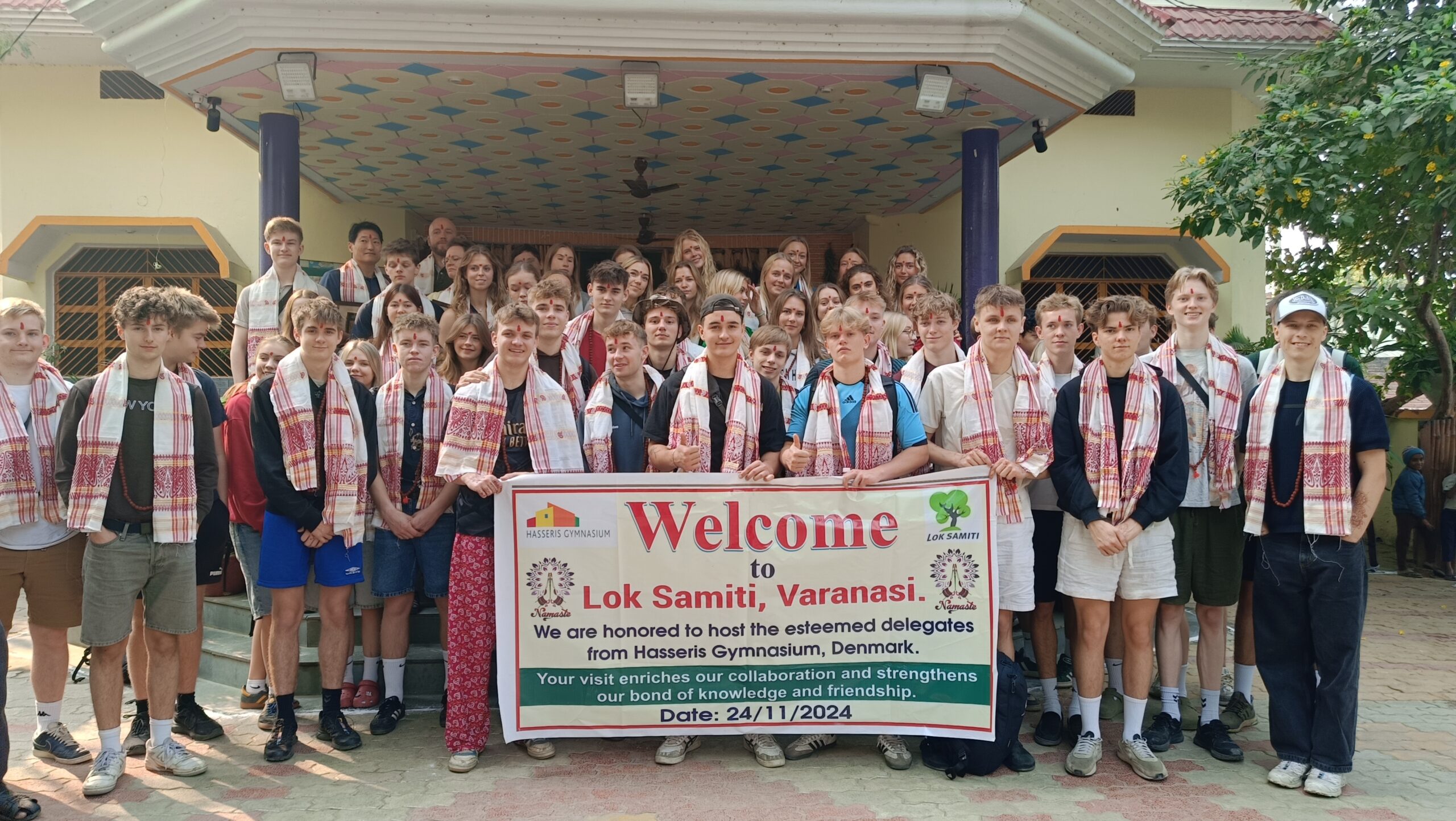
Students at Lok Samiti
The Beginning: Excitement Mixed with Nervousness
When I first received confirmation about the group, my initial reaction was a mix of excitement and anxiety. Hosting international visitors was not new to me, but managing a group of 60 people : students and professors together was an entirely different challenge. The expectations were high. This was not a leisure tour. It was an educational immersion. The students were curious, observant, and eager to learn. Their professors were experienced and detail-oriented. I knew that every aspect of the visit had to be carefully thought through.
The biggest concern at the beginning was simple but critical: logistics.
The Transport Challenge: Solving a Complex Puzzle
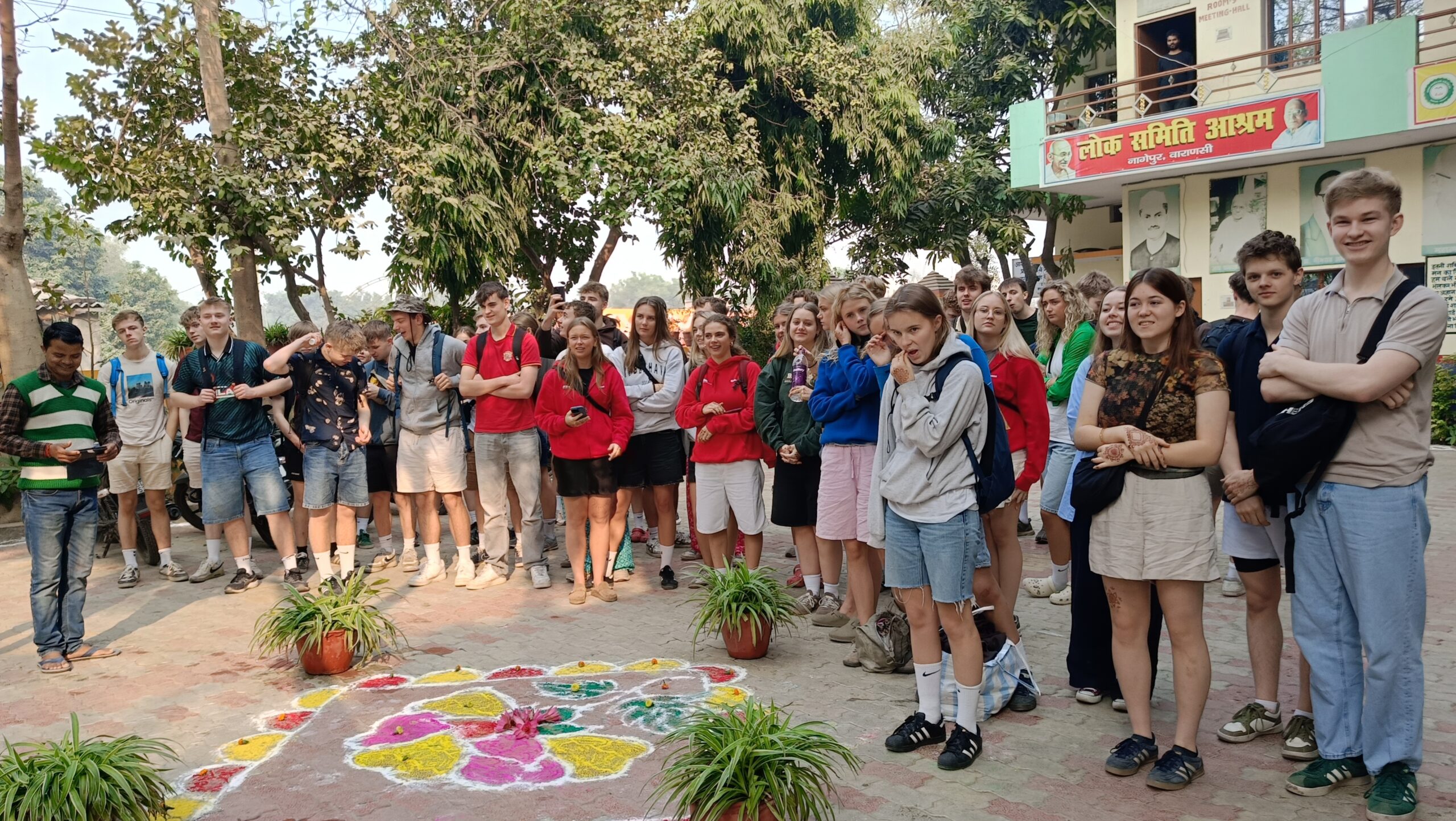
One of the first major hurdles was transportation. The plan was to take the group to Nagepur village, where they would interact with the grassroots organization Lok Samiti and experience rural life firsthand. However, there was a problem. The streets leading into the village were narrow, too narrow for a large bus to navigate comfortably. Bringing a 60-seater bus into the village would not only be impractical but could also disrupt the local environment. After careful consideration, I decided on an alternative solution: instead of one large vehicle, I arranged 15 Toyota Innova Crysta cars.
This decision came with its own complexities:
- Coordinating 15 drivers
- Ensuring all vehicles arrived on time
- Managing group distribution
- Maintaining communication across vehicles
But it was the most practical and respectful way to access the village without causing inconvenience to the residents. Looking back, this decision set the tone for the entire visit, it was about adapting to the local context rather than imposing external convenience.
Planning with Lok Samiti: Designing an Authentic Experience
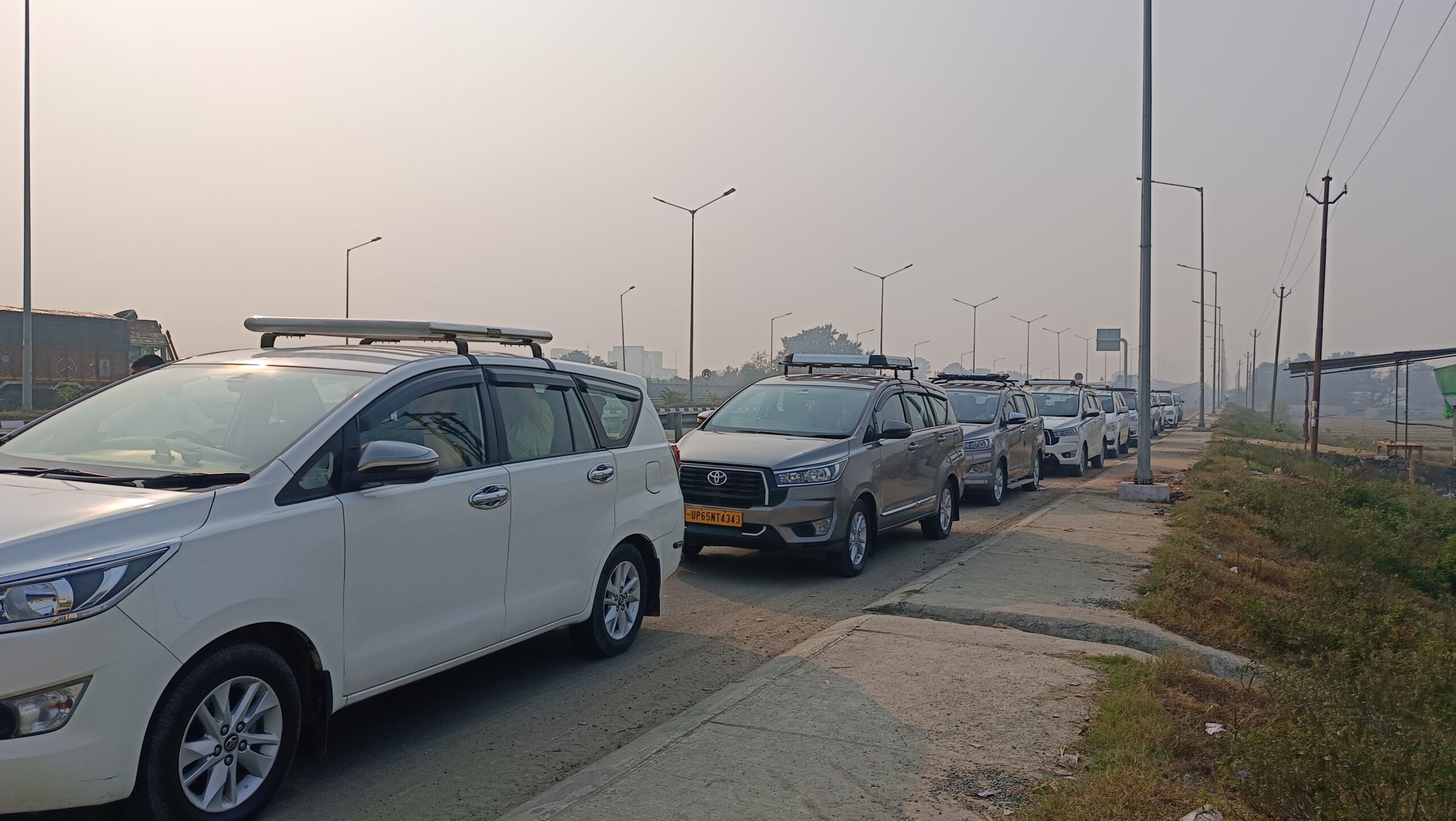
A key part of the visit was the collaboration with Lok Samiti, a grassroots organization working in the Varanasi region on issues related to community development, environment, and social justice. I worked closely with Mr. Nandlal Master, the convener of Lok Samiti, to design the structure of the visit. Our goal was clear: we did not want to create a staged or artificial experience. We wanted the students to feel the authenticity of rural India.
We discussed the flow of the day in detail:
- A traditional welcome
- Refreshments
- An introductory presentation
- A documentary screening
- Village visits and community interaction
- A plantation activity
- Lunch and discussion
- Open Q&A session
Every element was intentional. Every segment had a purpose.
A Warm Welcome: First Impressions Matter
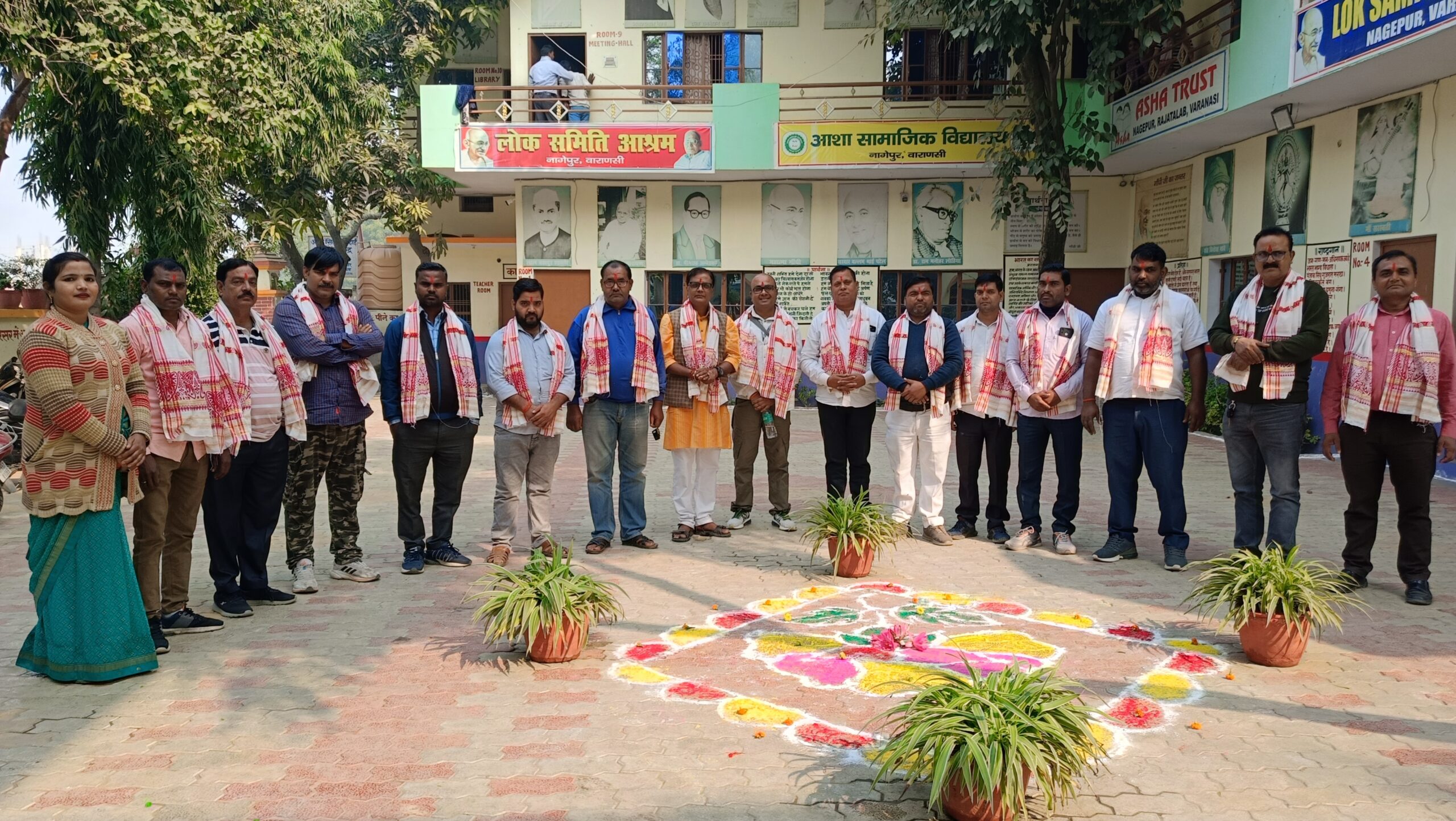
When the group arrived at Lok Samiti, we began with a traditional Indian welcome. Each student and professor was greeted with:
- A scarf (angavastram)
- A rudraksha mala
- A tilak (teeka) applied on the forehead
This moment was simple, yet powerful. It immediately created a cultural connection. For many of the students, it was their first direct experience of such a traditional form of hospitality. You could see curiosity, smiles, and a sense of openness emerging right from the beginning.
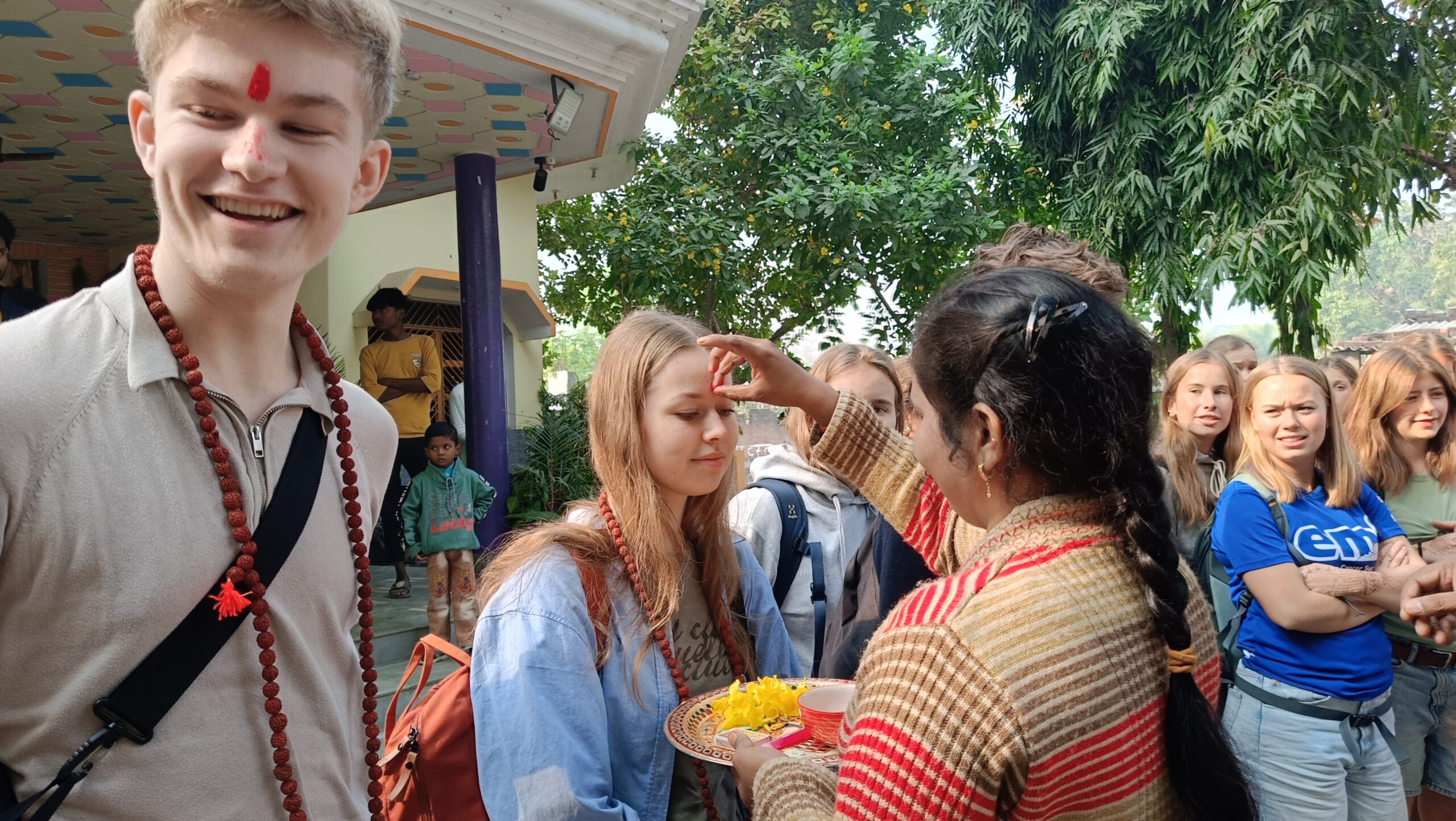
Refreshments and Settling In
After the welcome, we arranged tea and light snacks. This gave everyone time to relax after the journey and adjust to the new environment. These small transitions are important. They create space for people to absorb their surroundings before engaging in deeper discussions.
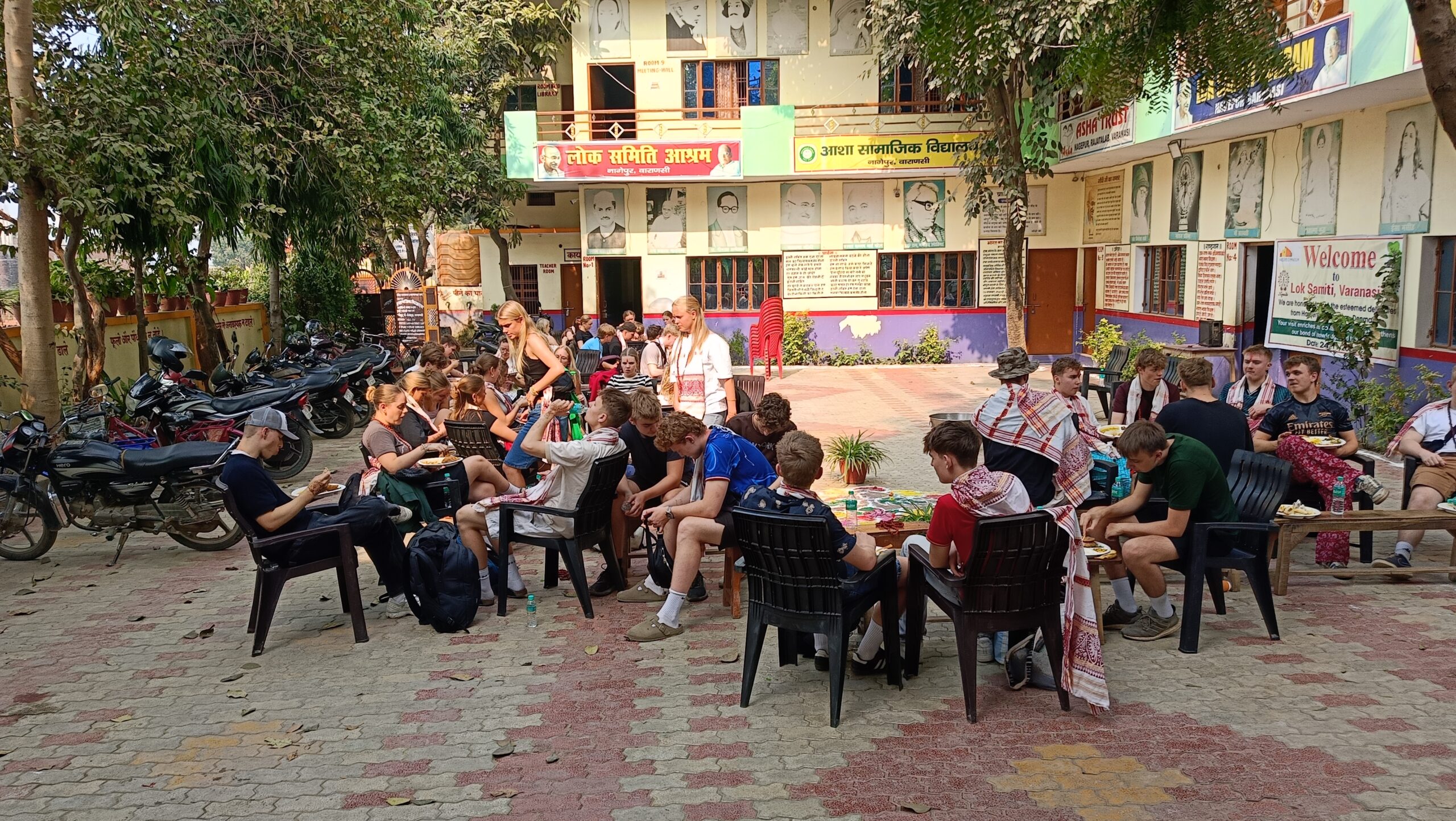
Refreshment time
Understanding Lok Samiti: The Indoor Session
We then moved to an indoor session where the team from Lok Samiti introduced their work.
This included:
- An overview of their mission and activities
- Introduction to field workers and volunteers
- Distribution of informational booklets
The idea was to provide context before taking the students into the field. It helped them understand the social, environmental, and political dimensions of the work being done.
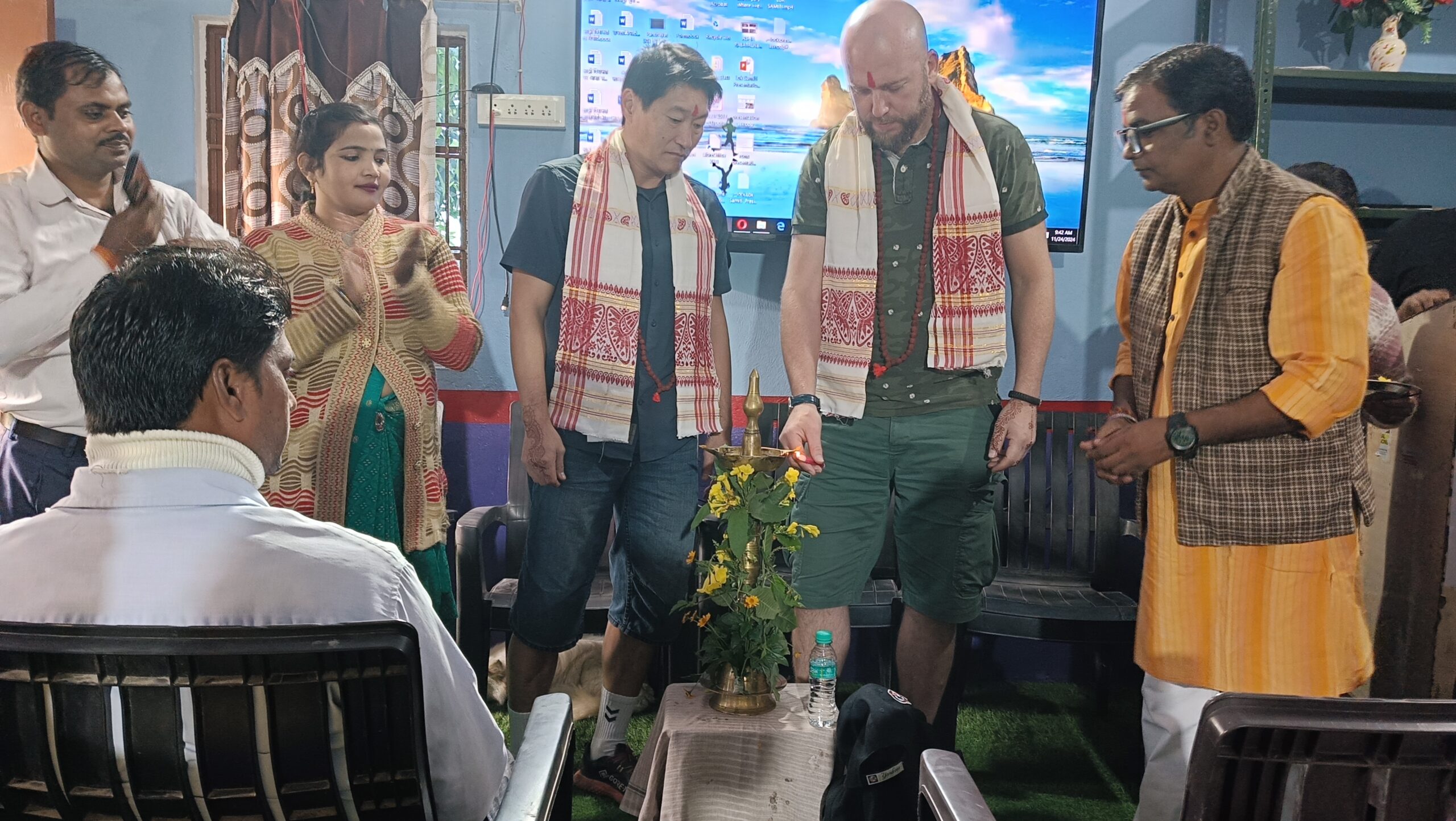
Traditional way to inaugrate the program
The Documentary: A Powerful Story of Resistance
One of the most impactful parts of the session was the screening of a documentary about Lok Samiti’s struggle against Coca-Cola.
The film highlighted:
- Issues of groundwater depletion
- Environmental degradation
- Community mobilization
- Grassroots activism
The students watched with deep interest. For many of them, this was their first exposure to such a movement in rural India. It also sparked questions that would later shape the discussion sessions.
Into the Village: Real Engagement Begins
After the indoor sessions, it was time to step into the village. Managing such a large group in a rural setting required careful planning. To ensure meaningful interaction, I divided the students into five smaller groups.
Each group was led by:
- Myself
- Two additional guides
- Members of Lok Samiti
This structure allowed for more personal and immersive experiences.
Community Interaction: The Heart of the Visit
My primary focus was community interaction. We organized visits to local homes, where students could:
- Sit with families
- Observe daily life
- Ask questions
- Understand challenges firsthand
These moments were not scripted. They were organic and often emotional.
The students encountered:
- Simplicity and resilience
- Resource limitations
- Strong community bonds
For many, this was a transformative experience. It shifted their understanding of poverty, development, and dignity.
Community interaction
Plantation Activity: Leaving Something Behind
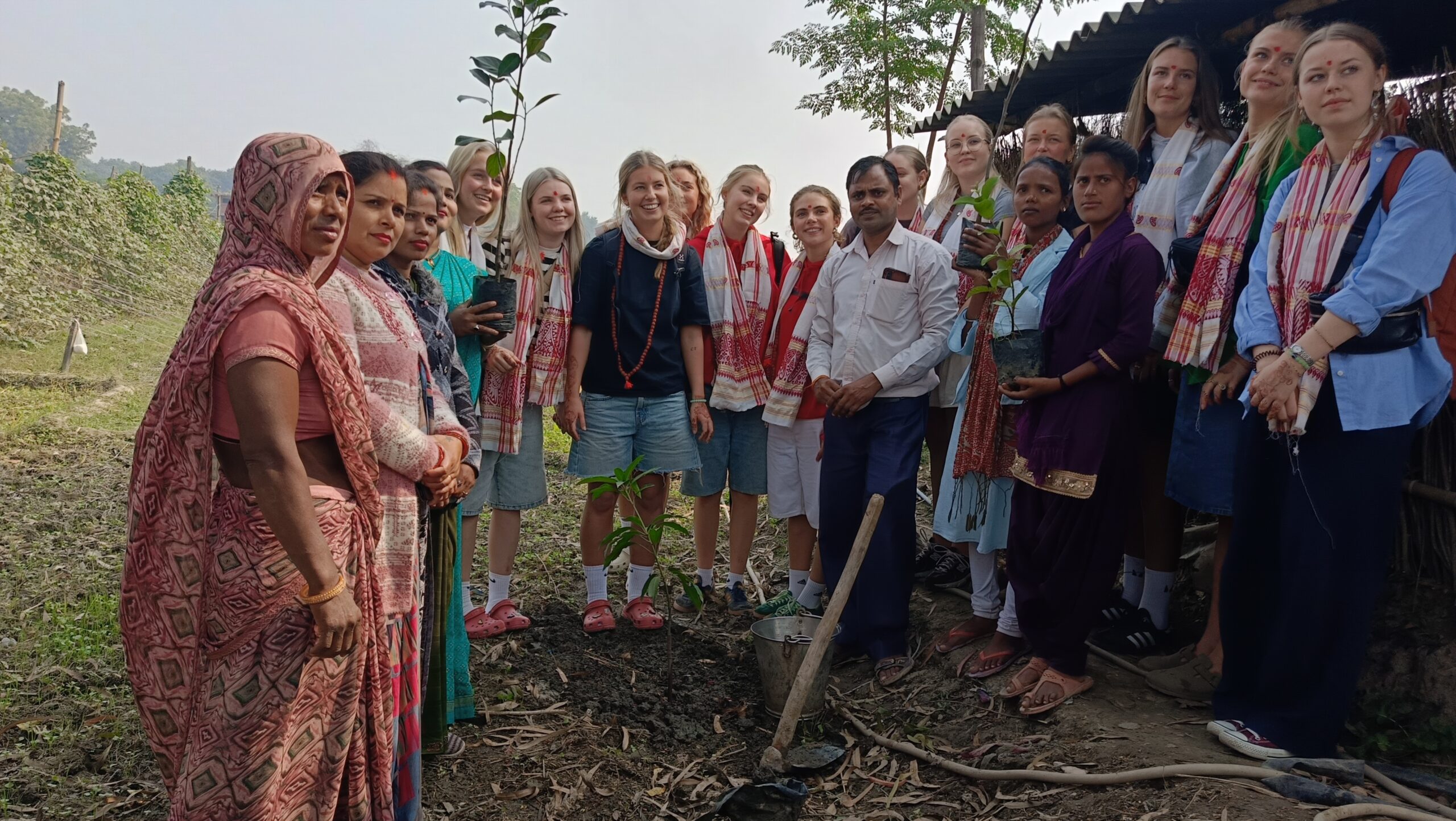
Another important part of the visit was the plantation program. The students actively participated in planting trees across the village. This was not just symbolic, it was a way of contributing to the community. We also requested the villagers to take care of the planted trees, ensuring that this act would have a lasting impact. The activity created a sense of shared responsibility and connection between the visitors and the local community.
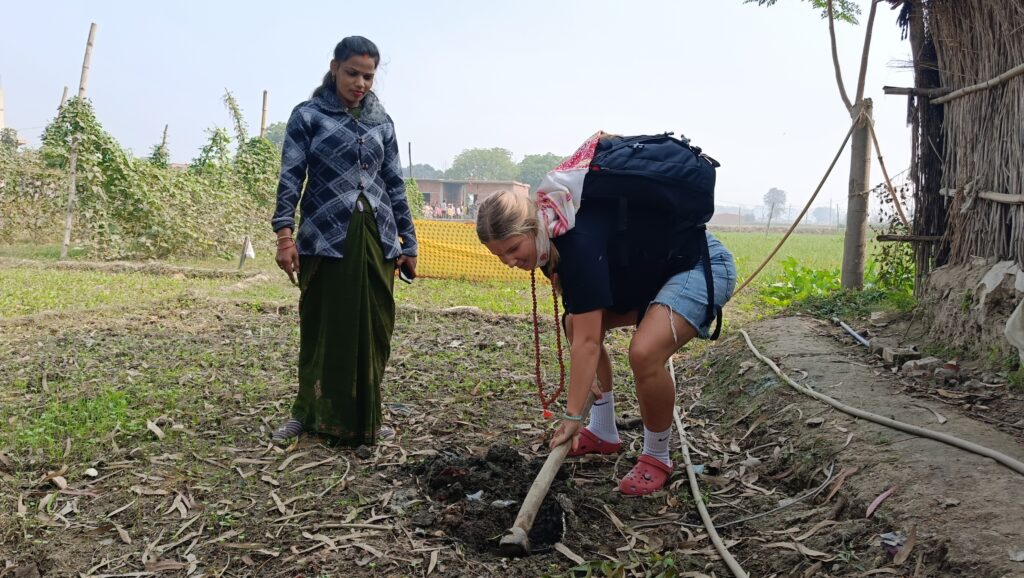
Plantation
Lunch and Informal Conversations
After the village visit and plantation activity, everyone returned to the Lok Samiti office for lunch. This was a much-needed break, but it was also a time for informal conversations. Students discussed their experiences, shared observations, and reflected on what they had seen.
The Q&A Session: Deep and Meaningful Dialogue
Post-lunch, we organized an open question-and-answer session. We invited Lok Samiti workers and volunteers working on various issues to engage directly with the students.
The range of topics covered was extensive:
- Coca-Cola and environmental concerns
- Women’s rights and health
- Education challenges
- Gender issues
- Community development
- Social inequality
The students asked thoughtful and sometimes difficult questions. The responses were honest, grounded, and insightful. This session stood out as one of the most intellectually engaging parts of the visit.
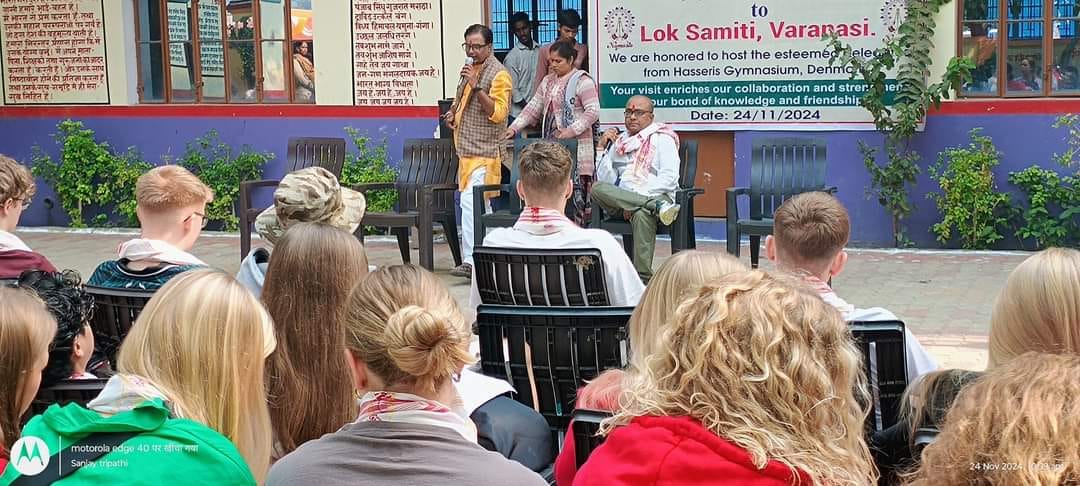
Question and Answer session
A Joyful Ending: Music, Dance, and Connection
Before concluding the visit, something beautiful happened. The students from Denmark and the children studying at the Lok Samiti school came together in a spontaneous celebration of music and dance. There was laughter, energy, and pure joy. Moments like these go beyond language and culture. They create human connections that are difficult to describe but impossible to forget.
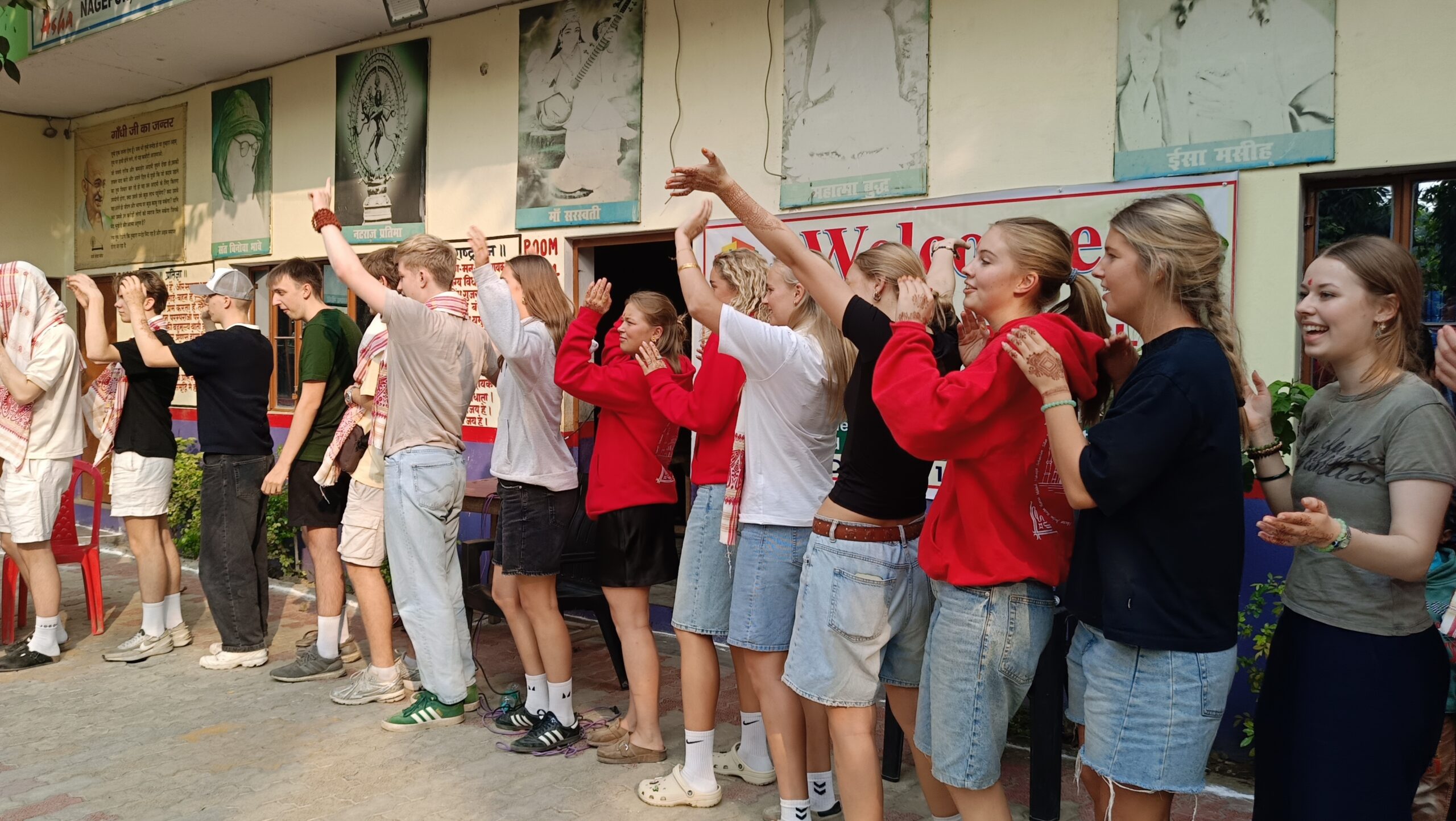
Students dancing
Acts of Kindness: Gifts and Support
The visiting students had brought gifts for the children at the Lok Samiti school. These were distributed, bringing smiles and excitement. In addition, they made a financial contribution. I later used this donation to purchase sweaters for all 550 children studying at the school. This gesture ensured that the impact of their visit would continue beyond a single day.
When the Plan Changes: Unexpected Challenges
Just when I thought the day had ended successfully, a new challenge emerged. The program coordinator informed me of sudden changes:
- Their hotel had been changed at the last moment
- Their train had been cancelled
- They would now travel to Delhi by bus
This raised several concerns. From my experience, certain things did not add up. For example:
- Booking 60 first AC train tickets together is highly unusual
- Changing a five-star hotel after one night seemed suspicious
It appeared that there might have been some mismanagement or possibly a scam by their travel agent. However, at that moment, my role was not to investigate but to support.
Another Challenge: Arranging Dinner for 60 People
The group then requested packed dinner boxes for their journey. This was not a simple task. The key concern was food suitability. Many international visitors are not accustomed to spicy Indian food, and I wanted to ensure that the meals were comfortable and safe for them. I reached out to my niece, who runs a kitchen, and explained the situation. She prepared meals specifically tailored for the group : mild, balanced, and suitable for their taste. Coordinating the preparation and delivery of 60 meal boxes on short notice was challenging, but it was completed successfully.
The Final Stretch: Ending on a Positive Note
Despite the unexpected complications, everything was eventually managed. The group departed safely, well-fed, and satisfied. For me, it was a moment of relief and quiet satisfaction.
Reflections: What This Experience Meant to Me
This entire journey was more than just an assignment.
It was:
- A test of my planning and problem-solving abilities
- A lesson in adaptability
- A reminder of the importance of cultural sensitivity
- A reaffirmation of the value of grassroots engagement
I started the day feeling nervous about handling such a large group. I ended it with confidence, experience, and gratitude.
Looking Ahead
This experience has opened new possibilities. I look forward to working again with Hasseris Gymnasium in the future and continuing to create meaningful, educational, and responsible travel experiences. Because in the end, what matters is not just showing places but creating understanding.
Real journeys are not about destinations. They are about connections, challenges, and the stories we carry forward.